

When the Silence Hits: What Adjusting to Single Life Actually Takes
Adjusting to single life after a long-term relationship is one of the most disorienting transitions a person can go through. One day your world is built around another person — shared routines, a shared identity, a shared future. Then suddenly, it isn’t.
The silence can feel sharp. Not peaceful. Just… empty.
If you’re in that place right now, here’s the short answer to what actually helps:
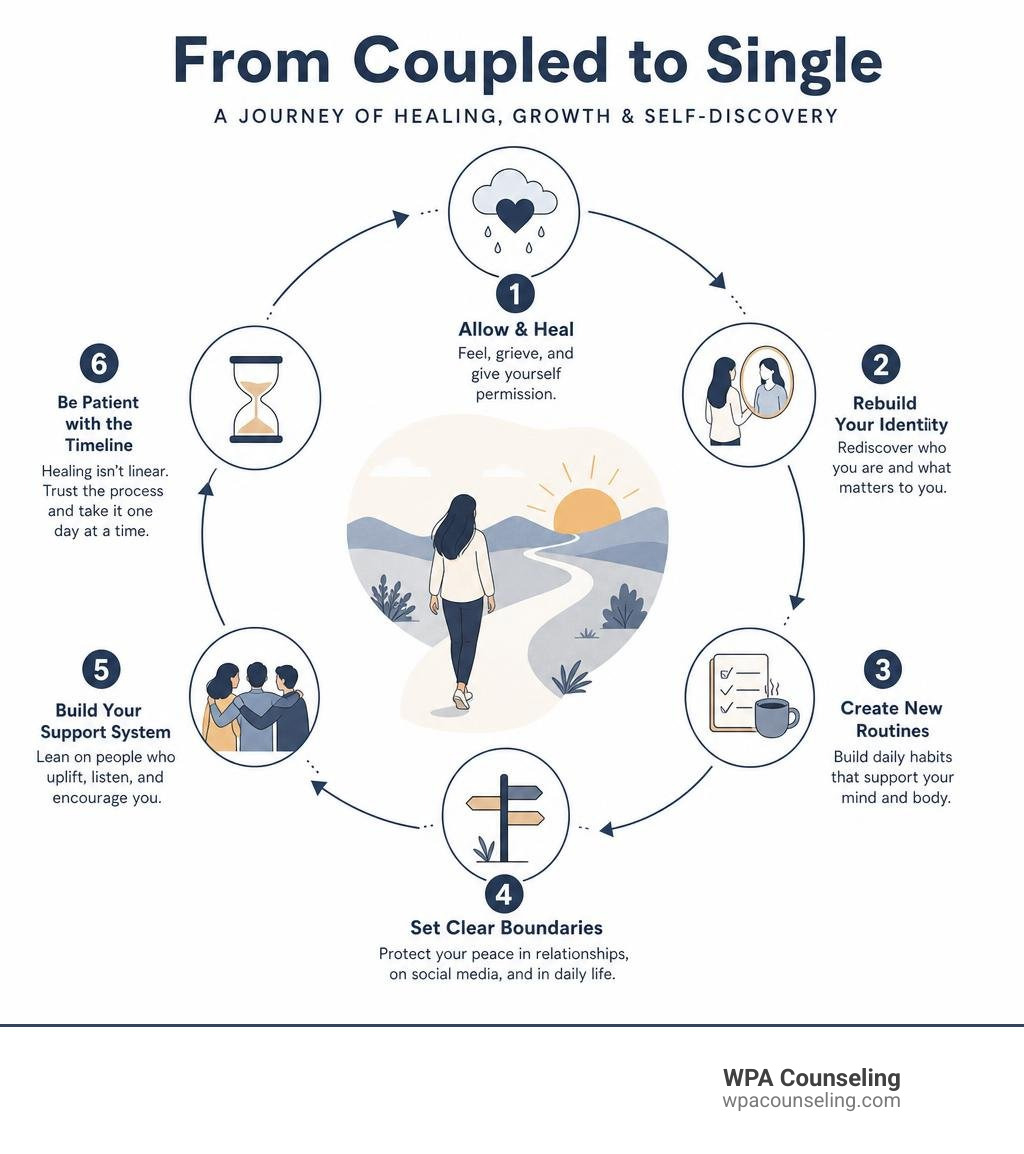
How to adjust to single life after a breakup:
- Allow yourself to grieve — sadness, relief, and confusion can all exist at the same time, and all of it is normal
- Rebuild your identity — rediscover who you are outside of the relationship, your values, your preferences, your goals
- Create new routines — structure your days intentionally to support your sleep, mood, and sense of stability
- Set clear boundaries — with your ex, mutual friends, and on social media
- Build your support system — lean on trusted friends, family, or a professional counselor
- Be patient with the timeline — this transition takes time, and there’s no universal deadline for “being over it”
This isn’t just emotional work. It’s practical, identity-level, day-to-day work. And it’s harder than most people expect.
According to UK data, adults who are recently single or living alone are among the highest-risk groups for severe loneliness — and chronic loneliness in the UK has risen by more than half a million people since the pandemic. You’re not weak for struggling. This is genuinely difficult terrain.
The good news? With the right tools and support, this transition can become one of the most meaningful growth periods of your life.
This guide walks you through every part of it — from the emotional stages and identity rebuilding to practical solo living skills, boundary-setting, and knowing when professional support makes sense.
The Emotional Stages of Adjusting to Single Life
When a long-term relationship ends, your entire nervous system experiences a shock. The person who served as your primary attachment figure is suddenly gone. This triggers a complex emotional process that rarely moves in a straight line. One day you might feel completely liberated, and the next, you find yourself crying in the grocery store aisle because you saw their favorite brand of cereal.
Understanding these emotional stages can help you practice self-compassion when the waves of grief feel overwhelming.
Navigating Grief and the Loss of a Shared Identity
We do not just grieve the person we lost; we grieve the life we had built with them and the future we had planned. In a long-term relationship, your identity becomes deeply intertwined with your partner’s. You might have been known as “the couples who host game nights” or “the outdoorsy pair.” When that partnership dissolves, you are left facing a profound sense of identity loss.
This loss often triggers attachment trauma. Our brains are biologically wired to seek proximity to our attachment figures for safety. When that bond is broken, the brain’s alarm system—the amygdala—goes into overdrive, mimicking physical pain and threat. To navigate this, you must allow yourself to experience the full weight of your grief without rushing the process. Trying to force yourself to “get over it” only delays the healing.
If you find yourself struggling to navigate these intense emotions, it can be helpful to explore dedicated support for dealing with divorce grief, which offers structured ways to process the painful end of a long-term partnership.
Coexisting Relief and Sadness After Separation
One of the most confusing aspects of adjusting to single life is the cognitive dissonance that arises when you feel both relief and deep sadness simultaneously. If the relationship was filled with conflict, emotional distance, or unmet needs, you might feel a profound sense of peace and freedom when it ends. Yet, in the very same hour, you might experience intense grief.
This coexistence of conflicting emotions is entirely normal. It is common to miss the comfort of a shared routine while simultaneously recognizing that ending the relationship was the right decision. Giving yourself permission to hold both of these truths at once is a critical step in understanding divorce recovery stages. Healing is not about eliminating sadness; it is about expanding your capacity to hold both your past grief and your present peace without judgment.
Rebuilding Your Identity and Sense of Self
When you are no longer half of a couple, you are presented with a blank canvas. While this can feel terrifying at first, it is also a rare and beautiful opportunity for self-discovery and personal growth. Rebuilding your identity is about shifting your focus from “we” back to “me.”
Taking Off the Mask to Discover Who You Are
During a long-term relationship, many of us unconsciously wear a “mask” of compromise. We might suppress our own preferences, hobbies, or even core values to keep the peace or align with our partner’s lifestyle.
At WPA Counseling, the first stage of our Counseling Blueprint is called Take Off the Mask. This stage is all about building a safe, trusting therapeutic relationship where you can shed the expectations of your past relationship and explore who you truly are.
Ask yourself:
- What did I love doing before this relationship that I stopped doing?
- What are my core values when no one else is in the room?
- What brings me joy, independent of anyone else’s approval?
Through intentional self-reflection and professional guidance like individual counseling, you can begin peeling back the layers of who you had to be, revealing the resilient, authentic individual you actually are.
Reclaiming Personal Autonomy and Decision-Making
When you have been part of a couple for years, your decision-making muscles can atrophy. You are used to consulting someone else on everything from what to have for dinner to how to arrange the living room. Suddenly making these choices alone can feel paralyzing.
The key to regaining your confidence is to start small. Practice making low-stakes, unilateral decisions. Choose a restaurant solely because you want to eat there. Redecorate a corner of your home to match your exact taste, even if it is a style your ex-partner would have disliked.
Gradually taking charge of your daily life is a powerful way of rebuilding confidence in decision-making. Each independent choice you make acts as a building block for your self-worth, proving to yourself that you are fully capable of steering your own ship.
Practical Steps for Creating a Fulfilling Solo Lifestyle
Transitioning to living alone requires more than just emotional adjustment; it requires practical lifestyle design. Creating a physical and daily structure that supports your well-being is essential for lowering the cognitive load of this major transition.

Establishing New Routines and Biological Regulation
When you live alone, you lose the external biological cues that a partner naturally provides. There is no one else walking into the kitchen to prompt dinner, and no one turning off the living room lights to signal bedtime. Because of this, suddenly living alone can severely disrupt your nervous system, sleep hygiene, and circadian rhythms.
Routine acts as a form of biological regulation. When your daily life is predictable, your brain’s threat response lowers, reducing cortisol levels.
- Prioritize Sleep: Keep your sleep and wake times consistent, even on weekends. Set a wind-down routine 60 minutes before bed by dimming lights and putting away screens.
- Nourish Your Body: Eating alone can easily lead to skipping meals or relying on processed convenience foods. However, nutritional psychiatry shows that our diet directly impacts our mental health through the gut-brain axis. In fact, research indicates that Mediterranean-style diets are associated with a 32–45% reduction in depressive symptoms, largely by reducing inflammation and supporting gut microbiome diversity (where 90% of our serotonin is produced).
- Schedule Social Contact: Treat social connection with the same importance as a doctor’s appointment.
By focusing on establishing routines when living alone, you provide your body with the stability it needs to process emotional grief.
Relearning Financial and Household Skills for Adjusting to Single Life
One of the steepest learning curves of adjusting to single life is managing a household independently. Long-term partners often divide and conquer chores; one might handle the finances and home maintenance, while the other manages cooking and cleaning. When you are single, you must take on all of these roles while navigating the “singles tax”—the structural reality that living alone is simply more expensive than splitting costs.
Take a proactive approach to your finances and household:
- Create a 3-Month Budget: Track your cash flow meticulously to understand your new financial baseline.
- Build an Emergency Fund: Because you do not have a partner’s income to fall back on, aim to save a six-month emergency fund over time.
- Learn Basic Home DIY: Use online video tutorials to learn how to fix a running toilet, locate your water shut-off valve, or reset a tripped breaker.
- Build a Rolodex of Trusted Professionals: Keep a physical list of reliable local plumbers, electricians, and locksmiths on your fridge.
Taking charge of these practical logistics is a massive step toward managing finances and starting over with confidence and peace of mind.
Managing Boundaries, Social Circles, and Future Dating
As you stabilize your internal world and physical space, you must also navigate the external world of relationships. This includes managing your connection with your ex-partner, handling mutual friendships, and eventually deciding how to approach new romantic connections.
Setting Boundaries with an Ex-Partner and Mutual Friends
Maintaining constant contact with an ex-partner immediately after a breakup often keeps the emotional wound wide open. While some believe that staying friends right away is the mature thing to do, it frequently prevents the reality of the breakup from truly sinking in. Listening to your intuition and implementing a “cold turkey” period of no contact is often the healthiest choice.
If you must maintain contact due to co-parenting or shared business, keep your communication strictly transactional, brief, and focused on the logistics at hand.
When it comes to mutual friends, recognize that your social circle will likely shift. Some friends may feel caught in the middle, and some relationships may naturally fade. This is a normal part of the process. Avoid checking your ex’s social media, and consider taking a temporary break from social platforms altogether to protect your peace.
Focusing on clean boundaries is essential for healing beyond separation and giving yourself the room required to grow.
Approaching Casual Dating and Intimacy Healthily
When the initial pain of a breakup begins to subside, the question of dating inevitably arises. Some people rush onto dating apps immediately to seek validation or escape the discomfort of loneliness. However, using casual dating or sex as an emotional band-aid rarely works; it often leaves you feeling emptier, as casual connections cannot fill the deep emotional intimacy gap left by a long-term partner.
Before re-entering the dating scene, assess your emotional readiness:
- Are you dating to escape your feelings, or because you genuinely want to connect with someone new?
- Can you handle a rejection or a bad date without it damaging your self-worth?
- Have you identified your non-negotiables, core values, and boundaries?
If you want to explore your relationship patterns, attachment style, or anxiety surrounding dating, seeking professional relationship counseling can provide invaluable clarity before you invite a new partner into your life.
Combating Loneliness and Embracing Solitude
There is a profound difference between loneliness and solitude. Loneliness is the painful, subjective feeling of lack and isolation. Solitude, on the other hand, is a chosen, peaceful state of being complete within yourself. Transitioning from loneliness to solitude is one of the ultimate goals of adjusting to single life.
Overcoming the Grass Is Greener Mindset
In a society that heavily prioritizes coupled life, it is easy to fall into the trap of romanticizing partnership. When you are single and lonely, you might look at couples holding hands in public and assume their lives are perfect, completely forgetting the compromises, arguments, and emotional labor that come with a relationship. Conversely, married people often look at singles and envy their absolute freedom.
This “grass is greener” mindset is a cognitive distortion. To combat it, practice radical acceptance. Acknowledge that both singlehood and coupled life have unique benefits and distinct challenges.
By actively embracing singlehood and resisting pressure to be partnered, you can stop viewing this chapter of your life as a waiting room and start viewing it as a destination worthy of celebration.
Finding Peace and Solitude in Your Own Space
Your home should be a sanctuary, not a reminder of vacancy. If your living space still looks exactly the way it did when your partner lived there, it can act as a constant grief trigger.
Begin personalizing your space to reflect your taste alone. Buy the artwork you love, change the layout of your furniture, or paint a wall a color you find soothing. Fill your home with things that bring you comfort: soft blankets, plants, or music playing in the background to ease the silence.
Learning to find comfort in the quiet of your own home is a powerful antidote to loneliness. It teaches you that you are excellent company for yourself. This sense of peace is especially crucial during traditionally coupled times of the year, helping you navigate and cope with coping with holiday grief or seasonal loneliness with resilience.
Professional Support for Adjusting to Single Life
Navigating a major life transition like a breakup or divorce is incredibly heavy lifting. You do not have to carry the weight of this adjustment entirely on your own. Professional therapy can provide the objective, compassionate space you need to process your pain and rebuild your life.

How Evidence-Based Therapy Can Guide Your Transition
At WPA Counseling, we utilize evidence-based approaches—such as Cognitive Behavioral Therapy (CBT), Dialectical Behavior Therapy (DBT), attachment-based therapy, and trauma-informed care—to help you navigate this transition. Our trauma recovery strategies focus strictly on counseling-based techniques, helping you process emotional wounds and rebuild your nervous system’s sense of safety in a structured, therapeutic environment.
Our therapeutic approach is guided by our signature Counseling Blueprint, a structured, four-stage journey designed to help you heal and grow:
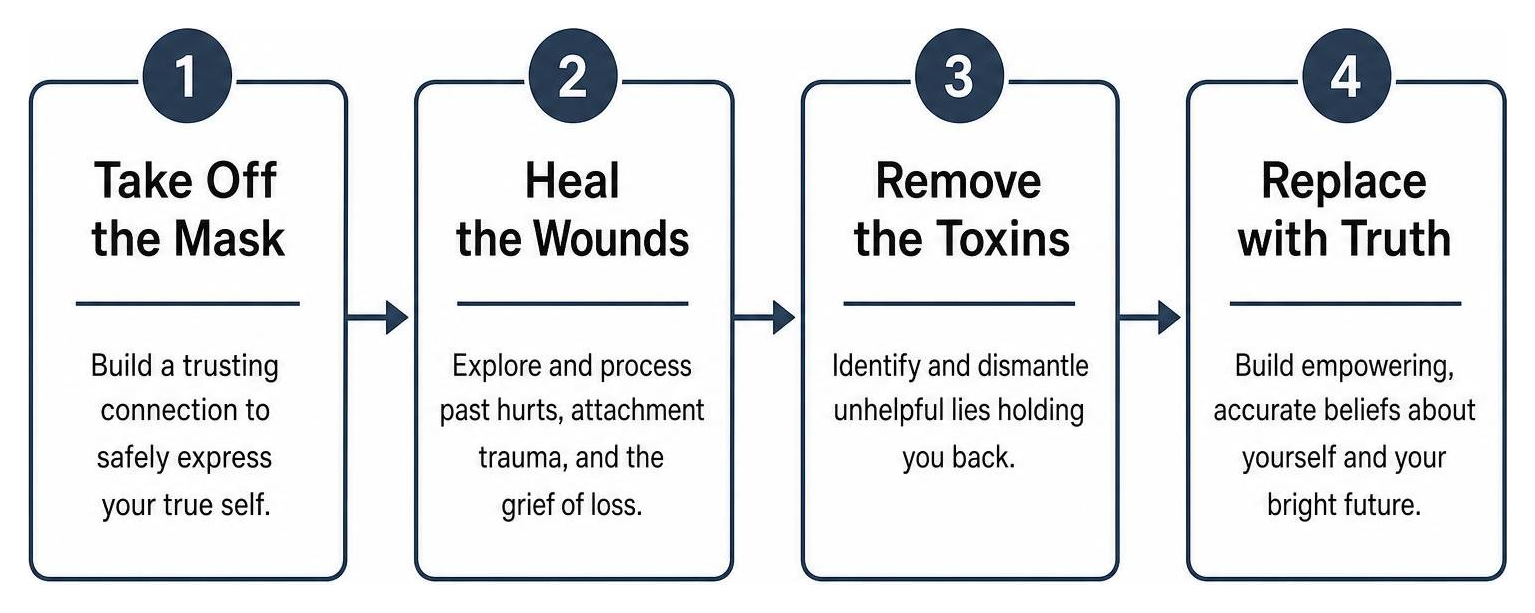
- Take Off the Mask: We establish a deep, trusting therapeutic relationship where you can drop your defenses and safely express your rawest emotions.
- Heal the Wounds: We gently explore the emotional and relational hurts of your past relationship, processing the attachment trauma and grief of the loss.
- Remove the Toxins: We help you identify and dismantle unhelpful, lingering lies you might be telling yourself, such as “I am unlovable” or “I will be alone forever.”
- Replace with Truth: We collaborate to install empowering, accurate perspectives about your self-worth, your capability, and your bright future.
If you are wondering whether this type of structured support is what you need right now, take a moment to reflect on your current coping mechanisms and read more about whether is therapy right for you.
WPA Counseling: Your Partners in Healing and Growth
WPA Counseling is a compassionate group practice of licensed professional counselors based in Irwin/North Huntingdon, Pennsylvania, with an additional office in Penn Hills. For years, our practice has served the local communities of Western Pennsylvania, establishing a deep history of helping residents navigate their most challenging life transitions. Our clinicians bring extensive clinical experience and specialized training to the therapeutic relationship, ensuring you receive high-quality, evidence-based care tailored to your unique situation.
Our team has extensive clinical experience helping individuals navigate the painful aftermath of breakups, separations, and divorces. We specialize in individual counseling, anxiety therapy, depression counseling, counseling-based trauma therapy, and specialized grief support.
If you are looking for a supportive local professional to walk alongside you in the Pittsburgh metro area or Westmoreland County, our team offers dedicated grief counseling in Pittsburgh to help you find your footing once again.
Frequently Asked Questions About Life After a Breakup
How long does it typically take to adjust to being single?
There is no universal timeline for healing. For some, the initial adjustment takes a few months; for others, especially after a marriage of several decades, it can take a year or two to fully reconstruct an independent life. Healing is non-linear. The goal is not to rush the process but to practice self-patience, noticing small signs of progress—like a day where the silence feels peaceful rather than lonely.
Is it normal to feel lonely even if I wanted the breakup?
Yes, absolutely. Ending a relationship that was unhealthy or mismatched is a positive decision, but it still represents a massive loss of routine, history, and companionship. Feeling lonely does not mean you made the wrong choice; it simply means you are a human being processing a major life transition.
How do I know if I am ready to start dating again?
You are likely ready to date when you no longer look to a new partner to “save” you from your loneliness or validate your self-worth. When you can happily enjoy your own company, know your boundaries, and view a future relationship as a complement to your already fulfilling life—rather than a missing piece to complete it—you are in a secure position to date healthily.
Conclusion
Adjusting to single life after a breakup is undeniably challenging. It demands that you sit with difficult emotions, rebuild your identity from scratch, and learn the practical logistics of living independently. But remember: starting over is not going backward. It is going forward.
This season of your life holds immense potential. It is your opportunity to build a life that is entirely, beautifully yours. You are stronger and more resilient than you feel in the quiet moments of the night, and you do not have to navigate this transition alone.
If you are ready to take the next step in your healing journey, we invite you to reach out to us. At WPA Counseling, we make it simple to get thoughtfully matched with a compatible licensed Pennsylvania counselor who understands your unique needs. Whether you prefer to meet in person at our Irwin/North Huntingdon or Penn Hills offices, or connect via secure statewide telehealth, we are here to support you.
To explore how therapy can help you make a clean break from the past and step into your future with confidence, read our guide on finding the best divorce recovery counseling online and contact WPA Counseling today to get matched with a therapist.
This article was researched with AI and heavily edited by Stephen Luther for accuracy and relevance.
Stephen Luther is the Executive Director and Founder of WPA Counseling. He holds a Master’s degree in Education from the University of Georgia and a Master’s degree in Marriage and Family Therapy from Duquesne University. He is a licensed professional counselor in Pennsylvania (LPC).
Since 1997, Steve has been helping children, adolescents, adults, couples, and families overcome emotional and relational challenges. He specializes in working with hurting families, including those with foster, adopted, or traumatized children. Steve uses Attachment-Based Therapy, client-centered therapy, and Therapeutic Parent Coaching to support healing and relationship restoration.
This guide is for educational and spiritual encouragement and is not a substitute for personalized professional counseling. If you are in crisis, please reach out for immediate help.
The Complete Guide to Divorce Grief