
Workplace Stress Counseling in Pittsburgh: A Clear Path to Support
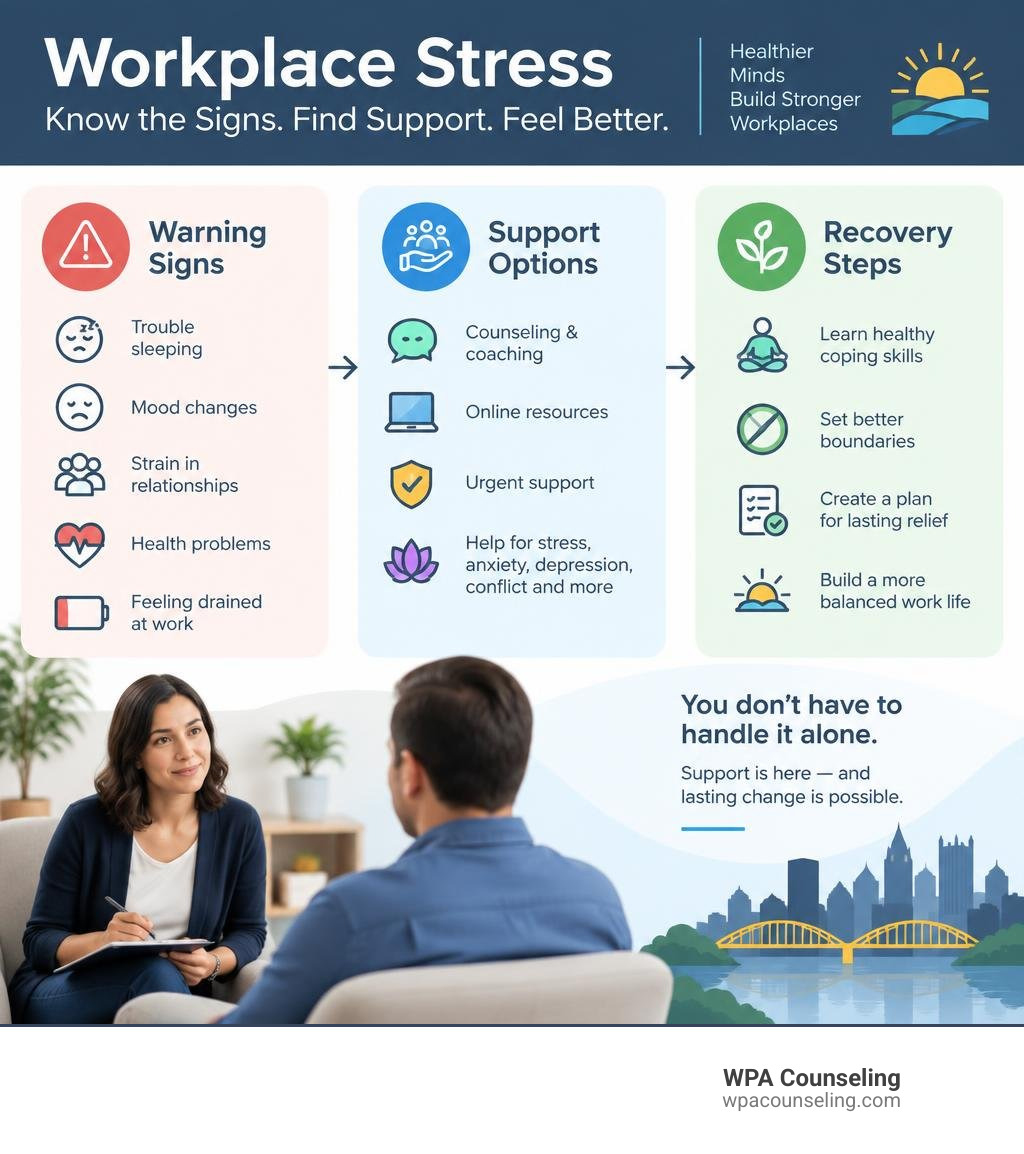
Workplace stress counseling in Pittsburgh can help when work pressure starts affecting your sleep, mood, relationships, health, or ability to get through the day. A licensed counselor can help you understand what is driving the stress, build practical coping skills, set healthier boundaries, and make a plan for lasting relief.
For many employees, an employer-sponsored assistance program may offer short-term counseling, coaching, online work-life resources, and urgent support. These programs can address stress, anxiety, depression, workplace conflict, family concerns, and major life changes. If you need ongoing or more specialized care, outpatient therapy can provide deeper support.
At WPA Counseling, we offer individual stress management and counseling for anxiety, depression, trauma, grief, and relationship strain. We provide in-person care in Irwin/North Huntingdon and Penn Hills, plus secure telehealth across Pennsylvania.
Getting help is not a sign that you cannot handle your job. It is a practical step toward protecting your well-being and creating a more sustainable work life.
Recognizing Job Burnout and Chronic Workplace Strain

Work is a central part of our lives, but when professional demands continually outweigh personal resources, chronic strain takes a serious toll. Burnout does not happen overnight. It develops gradually through sustained cognitive overload, unmanaged workloads, toxic office dynamics, and unresolved interpersonal conflicts.
When left unaddressed, the natural friction of a demanding job can spiral into emotional exhaustion, mental detachment, and a sharp decline in your performance and self-esteem. Recognizing the warning signs early is essential to protecting your health. Reviewing guidance on when to see a therapist can help clarify whether your daily fatigue has crossed the threshold into clinical burnout.
Understanding Workplace Stress Counseling Pittsburgh Workers Rely On
Occupational stress manifests in distinct ways across different career fields, from corporate towers and healthcare networks to local school districts and tech hubs throughout Western Pennsylvania. Navigating imposter syndrome, unrealistic quotas, and blurred boundaries when working remotely can leave professionals feeling constantly on edge.
Specialized clinical care helps individuals unpack these unique pressures. Engaging in dedicated anxiety counseling in Pittsburgh gives workers a confidential space to process performance anxiety, establish firm boundaries, and develop sustainable career practices. Rather than just enduring the workweek until Friday afternoon, therapy equips you to regain control over your schedule and emotional energy.
Signs You Need Professional Support Beyond Self-Care
Standard self-care habits like getting extra sleep, exercising, or taking a weekend getaway are vital, but they cannot fix chronic nervous system dysregulation or clinical distress. You may need comprehensive professional therapy if you notice:
- Persistent morning dread or Sunday evening panic attacks
- Severe insomnia, middle-of-the-night waking, or unrefreshing sleep
- Increasing cynicism, emotional numbness, and detachment from colleagues
- Irritability that spills over into your home life and personal relationships
- Psychosomatic symptoms like chronic tension headaches, muscle aches, or gastrointestinal issues
- Depressive feelings, a sense of hopelessness, or loss of interest in hobbies
When work stress begins interfering with your basic functioning, seeking individual counseling for anxiety and depression provides targeted strategies to restore balance and emotional stability.
Pittsburgh Employee Assistance Programs and Workplace Support Systems

Many professionals in the Pittsburgh area have access to workplace wellness benefits designed to assist with personal and vocational hardships. Major regional employers, including academic institutions like the University of Pittsburgh, often provide structured assistance systems such as LifeSolutions to help staff navigate life’s complexities.
How Employer-Sponsored Assistance Programs Support Employees
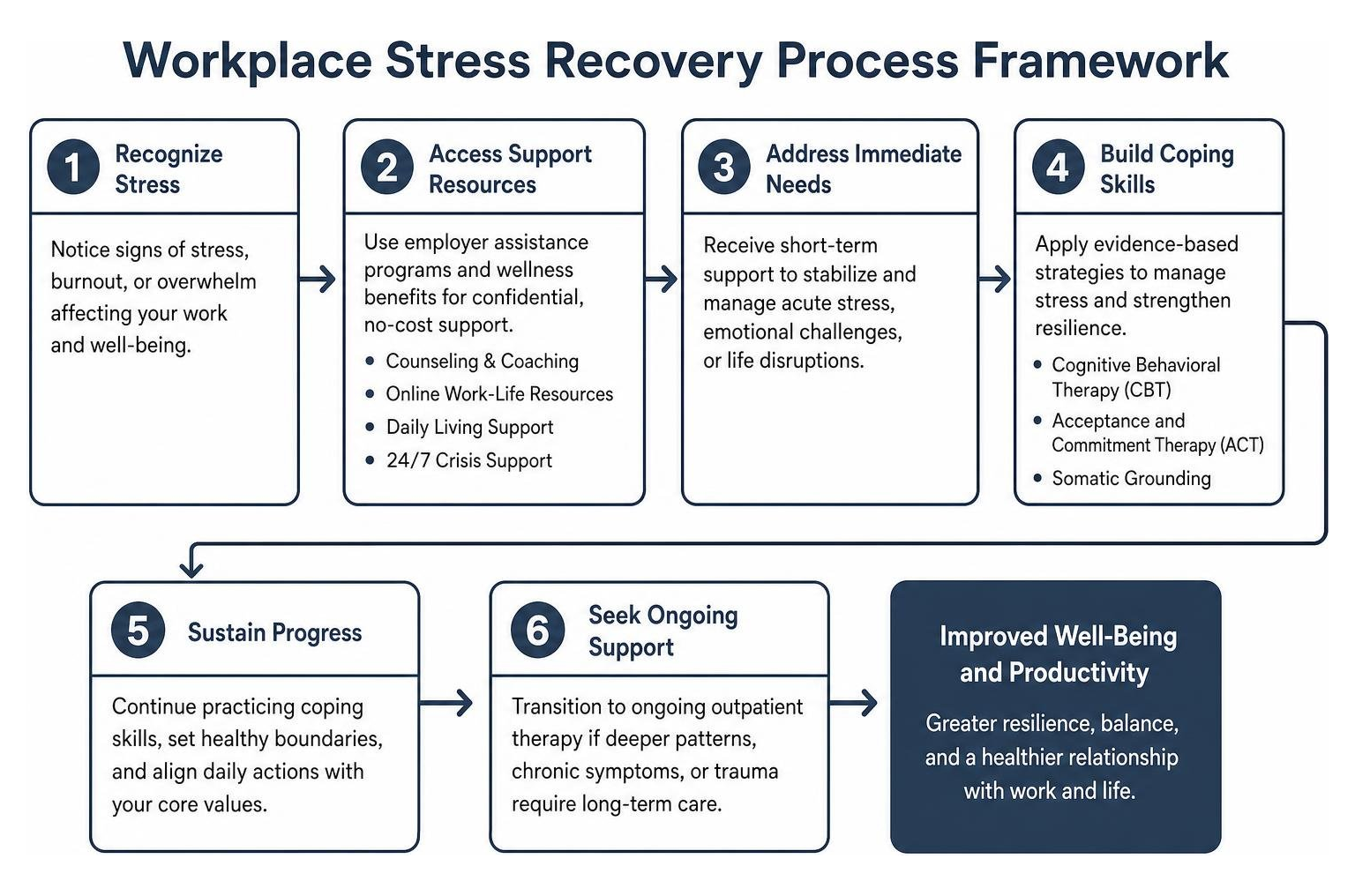
Employer-sponsored assistance programs offer confidential, short-term support to eligible employees and their household members at no out-of-pocket cost. These services often include:
- Short-Term Counseling and Coaching: In-person or telephone sessions targeting acute stress, depression, anxiety, interpersonal conflict, and major lifestyle transitions.
- Online Work-Life Databases: Broad digital libraries containing thousands of educational articles, webinars, and self-guided modules on emotional wellness, personal health, and working smarter.
- Daily Living Support: Referrals and resources for child care, elder care navigation, legal matters, and financial planning to ease the burden outside of working hours.
These programs serve as an excellent first point of contact for brief problem-solving, benefit navigation, and initial assessments.
Wellness Programs and Mental Health Emergency Resources
Many regional employers complement basic assistance benefits with comprehensive health initiatives, such as the University of Pittsburgh’s Wellness for Life program, extending wellness tools to employees, covered spouses, domestic partners, and students.
Importantly, structured workplace assistance programs also provide 24/7 crisis support lines for urgent situations. These hotlines offer immediate intervention, safety planning, and community referrals for severe mental health crises, including suicidal ideation, homicidal thoughts, acute trauma, and substance use or rehabilitation needs.
Evidence-Based Approaches to Workplace Stress Counseling Pittsburgh Residents Need
Effective counseling for career burnout goes beyond venting about a difficult manager. It relies on structured, research-backed modalities designed to retrain cognitive patterns and regulate physiological stress responses.
Therapists frequently draw upon structured modalities like Cognitive Behavioral Therapy (CBT) to challenge perfectionistic assumptions, Acceptance and Commitment Therapy (ACT) to reconnect with core personal values, and somatic grounding methods to settle an overactivated nervous system. These clinical tools help dismantle the root causes of vocational exhaustion and build lasting resilience.
How to Choose Workplace Stress Counseling Pittsburgh Providers for Long-Term Relief
While short-term employee assistance programs offer valuable immediate help, they are usually capped at a few sessions per issue and focus on short-term stabilization. Ongoing outpatient therapy is often necessary for resolving deeper behavioral patterns, chronic anxiety, or long-standing trauma.
| Feature | Employer Assistance Programs (EAPs) | Private Outpatient Therapy |
|---|---|---|
| Primary Goal | Short-term problem solving and stabilization | In-depth healing, pattern disruption, and long-term resilience |
| Session Limits | Typically capped (e.g., 3–8 brief sessions) | Flexible and continuous based on clinical need |
| Provider Choice | Assigned from an internal network | Freedom to select a clinician matched to your personality and goals |
| Scope of Care | Acute situational stress and work-life referrals | Deep exploration of anxiety, depression, trauma, and identity |
| Confidentiality | Confidential (managed through third-party administrator) | Fully confidential private clinical health record |
To evaluate your options and find a clinician who aligns with your specific schedule and needs, consult our detailed Pittsburgh therapy guide for actionable advice on choosing the right provider.
Overcoming Barriers with Flexible In-Person and Virtual Care
Demanding work schedules, long commutes across Pittsburgh bridges, and family responsibilities can make attending appointments challenging. Fortunately, flexible care options eliminate these hurdles.
Choosing secure online counseling in Pennsylvania allows you to attend confidential sessions from your private office or home, saving commute time while ensuring consistent, high-quality outpatient care.
Dedicated Outpatient Therapy and Support with WPA Counseling
At WPA Counseling, we understand the immense pressure that modern professionals carry every day. Established to serve communities throughout Western Pennsylvania, our group practice has built a trusted local practice history helping individuals and families overcome vocational burnout, life transitions, and mental health challenges. Our team brings extensive clinical experience in evidence-based care, helping clients navigate chronic work stress, anxiety, depression, trauma, grief, and relationship strain.
Our team of licensed Pennsylvania counselors utilizes proven therapeutic modalities tailored to your unique vocational and personal circumstances. Grounded in our clinical framework, we walk alongside you through four transformative stages of growth:
- Take Off the Mask: Cultivating a warm, non-judgmental therapeutic alliance where you can speak honestly about your struggles without fear of judgment.
- Heal the Wounds: Identifying the root emotional hurts, past career setbacks, perfectionism, or boundary violations that fuel your stress.
- Remove the Toxins: Uncovering and dismantling unhelpful beliefs, chronic guilt, and internalized pressure that keep you trapped in overwork.
- Replace with Truth: Establishing empowering perspectives, healthy boundary-setting skills, and sustainable daily habits that honor your well-being.
To make professional care accessible across Western Pennsylvania, we offer welcoming in-person therapy at our Irwin/North Huntingdon and Penn Hills offices, alongside secure telehealth services available to clients statewide throughout Pennsylvania. Our key clinical specialties include individual counseling, anxiety therapy, depression counseling, trauma therapy, couples counseling, family counseling, grief support, stress management, and faith-sensitive counseling.
Frequently Asked Questions About Workplace Stress Support in Pittsburgh
How do employees access employer-sponsored counseling?
Employees can typically reach out directly to their human resources department or call their organization’s assistance program line. For instance, University of Pittsburgh staff can contact their LifeSolutions specialist or log in to their designated online portal to schedule in-person or telephone sessions confidentially.
What types of workplace challenges and stress concerns are covered by local assistance programs?
Local programs usually assist with job burnout, interpersonal office conflict, anxiety, depression, family transitions, parenting demands, elder care coordination, and practical legal or financial stressors that impact daily focus.
Is 24/7 crisis support available for severe workplace mental health emergencies?
Yes. Many workplace assistance programs maintain round-the-clock crisis lines to assist employees experiencing severe distress, acute panic, substance use challenges, or thoughts of self-harm. If you or someone you know is in immediate life-threatening danger, calling 988 or visiting the nearest emergency department provides urgent, direct care.
Conclusion: Reclaiming Your Well-Being and Career Balance
You do not have to wait until you reach total exhaustion to seek help. Chronic job strain, mental fatigue, and anxiety do not have to define your career or dictate your personal life. By recognizing the early warning signs, setting healthy boundaries, and utilizing available community and clinical resources, you can build a balanced, resilient life.
If you are ready to move beyond constant overwhelm, our team at WPA Counseling is here to support you. We take great care in thoughtfully matching you with a compatible licensed therapist who understands your goals and honors your unique journey. Take the first step toward lasting balance today by exploring our counseling services and connecting with our team.
Stephen Luther is the Executive Director and Founder of WPA Counseling. He holds a Master’s degree in Education from the University of Georgia and a Master’s degree in Marriage and Family Therapy from Duquesne University. He is a licensed professional counselor in Pennsylvania (LPC).
Since 1997, Steve has been helping children, adolescents, adults, couples, and families overcome emotional and relational challenges. He specializes in working with hurting families, including those with foster, adopted, or traumatized children. Steve uses Attachment-Based Therapy, client-centered therapy, and Therapeutic Parent Coaching to support healing and relationship restoration.
This guide is for educational and spiritual encouragement and is not a substitute for personalized professional counseling. If you are in crisis, please reach out for immediate help.