

Understanding Online Therapy: Efficacy, Costs, and Clinical Benefits
Finding affordable online therapy starts with a few practical steps: check your insurance plan for in-network telehealth coverage, ask providers about out-of-network superbills for reimbursement, inquire about sliding-scale fees based on income, and use HSA or FSA funds to cover session costs. These options can make virtual behavioral healthcare both accessible and sustainable.
Virtual behavioral healthcare has transformed how individuals access mental health support. Numerous clinical studies confirm that teletherapy produces outcomes comparable to face-to-face sessions across many psychological concerns. By drawing upon established psychotherapy modalities, licensed providers deliver structured interventions—such as Cognitive Behavioral Therapy (CBT), Dialectical Behavior Therapy (DBT), and attachment-focused care—directly to clients via secure video.
The primary benefit of virtual care lies in dismantling traditional barriers. Commutes, childcare conflicts, mobility limitations, and rigid work schedules often prevent people from seeking help. Online platforms eliminate travel time and reduce related costs like fuel, parking, and public transit.
When evaluating whether digital sessions match individual needs, consider both the clinical setting and financial investment. Virtual therapy offers flexibility, but finding sustainable care requires balancing affordability with high clinical standards.
Clinical Effectiveness Across Diverse Age Groups and Conditions
Clinical research demonstrates strong efficacy across diverse age groups:
- Adults: High engagement and symptom reduction for mood disorders, life transitions, career stress, and relational challenges.
- Adolescents: Strong comfort with digital mediums, facilitating openness when paired with engaging, interactive strategies.
- Older Adults: High satisfaction and improved accessibility when physical mobility or transportation presents a hurdle, supported by intuitive platforms.
Digital interventions are particularly effective for mood and anxiety symptoms. Pennsylvania residents can connect with specialized virtual depression treatment programs designed to rebuild daily routines and reduce isolation. Similarly, structured virtual anxiety interventions teach evidence-based grounding techniques and cognitive restructuring from the comfort of home.
Clinical Contraindications: While virtual therapy treats many conditions effectively, it is not ideal for severe, acute psychiatric emergencies or active psychosis. In these instances, immediate emergency services or direct in-person clinical crisis support remain necessary.
Building a Strong Therapeutic Alliance in Online Therapy
A common question is whether a genuine human connection can develop through a screen. Research shows that the therapeutic alliance—the collaborative bond between client and counselor—is just as strong online as in person.
Licensed therapists use specific strategies to build rapport virtually:
- Maintaining intentional eye contact by positioning cameras at eye level.
- Attuning carefully to vocal tone, facial expressions, and micro-expressions.
- Establishing transparent communication norms and creating safe emotional space.
These practices allow for deep emotional processing, including secure attachment repair through telehealth, helping clients untangle relational patterns and build self-worth.
Essential Safeguards: Privacy, Crisis Protocols, and Legal Standards
Security and ethical safeguards are essential for responsible teletherapy. High-quality virtual care relies on strict privacy standards, clear emergency protocols, and adherence to state licensing laws.
Under HIPAA (Health Insurance Portability and Accountability Act) and HITECH standards, clinical video sessions must use end-to-end encrypted, dedicated telehealth platforms—never standard consumer video apps. These secure systems protect personal health information (PHI) from unauthorized access.
Responsible virtual practices also establish comprehensive crisis protocols at intake:
- Address Verification: Documenting the client’s physical location at the start of every session.
- Emergency Contacts: Maintaining up-to-date contact information for a trusted local individual.
- Local Resource Mapping: Identifying local emergency responders and crisis centers near the client’s location.
All practitioners must comply with state-level virtual mental health care standards, ensuring informed consent, accurate clinical records, and ethical practice.
Verifying Clinician Credentials and Ethical Telehealth Practice
Clinicians must be legally licensed in the state where the client is physically located during the session. In Pennsylvania, professional credentials include:
- LPC: Licensed Professional Counselor
- LCSW: Licensed Clinical Social Worker
- LMFT: Licensed Marriage and Family Therapist
- Licensed Psychologist
Clients can verify credentials through state licensing boards, such as the Pennsylvania Department of State’s online licensing verification portal. Reputable therapists are transparent about their credentials, evidence-based methods, and areas of clinical focus.
Technical Requirements and Digital Readiness for Online Therapy
Engaging in virtual therapy requires basic, accessible technology:
- Internet Connection: A stable broadband connection (recommended minimum: 10–15 Mbps download/upload) to prevent video lag.
- Devices: A smartphone, tablet, laptop, or desktop equipped with a working camera, microphone, and updated browser.
- Privacy Tools: A quiet, private room and standard headphones or earbuds to protect audio confidentiality.
Secure client portals make joining sessions simple, often requiring just a single click without complicated software downloads. This streamlined access helps expand mental health care into underserved and rural mental health communities across the state.
Practical Strategies for Finding Affordable Mental Healthcare

Navigating the financial side of mental healthcare requires understanding payment options and fee structures. Below is a breakdown of common payment pathways:
| Payment Method | How It Works | Financial Considerations | Best Suited For |
|---|---|---|---|
| In-Network Insurance | The practice bills your insurer directly; you pay a set copay or coinsurance. | Subject to deductibles; requires a formal mental health diagnosis on record. | Clients with comprehensive behavioral health coverage. |
| Out-of-Network Superbill | You pay the provider directly, then submit an itemized superbill to your insurer for reimbursement. | Reimbursement rates vary (often 50%–80% after meeting out-of-network deductibles). | Clients with PPO plans seeking specific specialized clinicians. |
| HSA / FSA Accounts | Use pre-tax health savings or flexible spending accounts to cover session fees or copays. | Lowers overall taxable income while covering eligible therapy costs directly. | Individuals with employer-sponsored health spending accounts. |
| Sliding-Scale Fees | Adjusted session rates based on household income and verified financial need. | Limited slots per practice; provides predictable, discounted out-of-pocket pricing. | Individuals without insurance or with high-deductible plans. |
When speaking with potential providers, ask clear financial questions:
- “Do you offer a sliding scale based on income?”
- “Can you provide an itemized superbill for out-of-network reimbursement?”
- “What are your self-pay rates for 50-minute individual sessions?”
Navigating Specialized Virtual Interventions on a Budget
Specialized therapy does not have to be cost-prohibitive. Structured, short-term, evidence-based frameworks can address specific concerns efficiently:
- Trauma Recovery: Using trauma-informed counseling, CBT, and emotional regulation techniques, remote trauma therapy helps clients process distressing experiences and reduce hypervigilance safely from home.
- Couples Therapy: Virtual sessions eliminate the logistical challenge of coordinating two schedules, offering focused telehealth relationship support to improve communication and resolve conflict.
- Family Systems: Families can participate together from multiple locations through online systemic family counseling, addressing relational dynamics without added travel stress.
Professional Standards and Clinical Excellence at WPA Counseling
At WPA Counseling, we are an established group practice of licensed professional counselors rooted in Western Pennsylvania. With years of dedicated clinical experience serving individuals, couples, and families, our local practice history began with a commitment to providing accessible, community-centered mental healthcare across Westmoreland and Allegheny counties. Today, we offer welcoming in-person offices in Irwin/North Huntingdon and Penn Hills, alongside secure, HIPAA-compliant telehealth services available statewide across Pennsylvania. Our seasoned clinical team brings extensive expertise in evidence-based psychotherapy, helping clients navigate complex emotional and relational challenges with clinical rigor and genuine empathy.
Our practice provides a comprehensive range of clinical services tailored to individual and relational needs:
- Individual Counseling for personal growth and emotional wellness
- Anxiety Therapy & Depression Counseling using evidence-based cognitive and behavioral tools
- Trauma Therapy focused on emotional healing and nervous system stabilization
- Couples & Family Counseling to repair trust, improve communication, and strengthen bonds
- Grief Support & Stress Management to navigate life transitions and loss
- Faith-Sensitive Counseling for clients seeking to integrate their personal faith into the therapeutic process
Our clinicians utilize proven modalities, including Cognitive Behavioral Therapy (CBT), Dialectical Behavior Therapy (DBT) skills, attachment-focused therapy, and trauma-informed care.
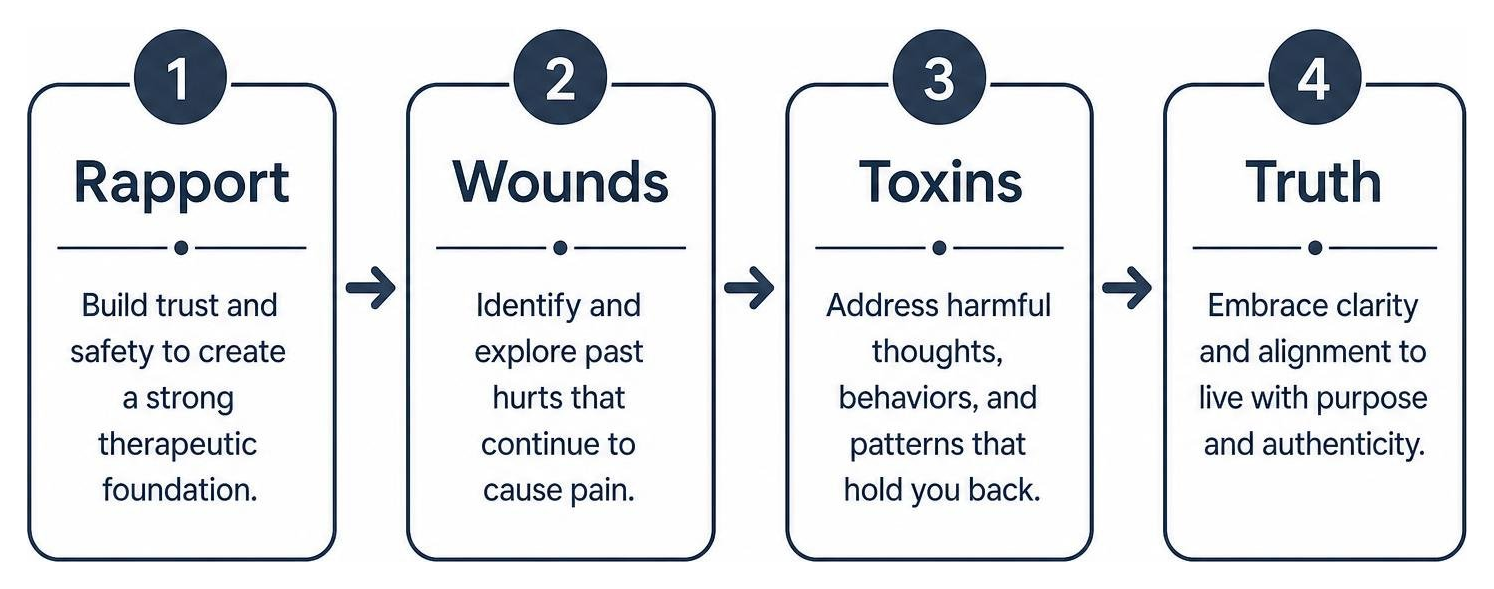
Therapy at WPA Counseling is guided by our four-stage Counseling Blueprint:
- Take Off the Mask: Establishing genuine rapport, safety, and non-judgmental acceptance so you can share openly.
- Heal the Wounds: Carefully identifying and processing emotional hurts, past trauma, and relational injuries.
- Remove the Toxins: Uncovering unhelpful beliefs, self-defeating patterns, and internalized falsehoods that keep you stuck.
- Replace with Truth: Integrating empowering, accurate perspectives about yourself, your relationships, and your future.
Whether you choose in-person care or connect through our licensed mental health support and statewide virtual counseling, our team provides consistent, evidence-based care focused on lasting recovery.
Frequently Asked Questions About Affordable Telehealth
How does the cost of remote therapy compare to traditional in-person sessions?
Standard clinical session fees for telehealth are generally equivalent to in-person sessions because both require the same licensed professional expertise and direct clinical time. However, remote therapy lowers overall costs by removing travel expenses, parking fees, childcare needs, and missed work hours. Many insurance providers also cover telehealth visits at the same rate as in-office appointments.
What mental health conditions are best suited for virtual treatment?
Virtual counseling is highly effective for mild to moderate depression, generalized anxiety, panic symptoms, life transitions, grief, relational conflict, career burnout, and trauma recovery. Acute conditions—such as active psychosis, severe unmanaged mania, or severe active suicidal crises—typically require intensive, face-to-face clinical interventions.
How can clients ensure their remote counseling sessions remain confidential?
Clients can maintain privacy by attending sessions from a private room behind a closed door, using headphones to keep audio confidential, running a white noise machine outside the door, and connecting over a secure, password-protected private Wi-Fi network rather than public hotspots.
Conclusion
Finding affordable, high-quality mental healthcare is an investment in your long-term well-being and relationships. Virtual therapy provides an effective, flexible, and accessible path forward, removing travel barriers while delivering the same evidence-based clinical support as traditional office visits.
Healing is most effective when you are paired with a clinician who understands your unique background, goals, and values. We invite you to take the next step toward emotional wellness with our team. Explore compassionate and affordable online counseling at WPA Counseling to get thoughtfully matched with a compatible licensed Pennsylvania counselor today.
Stephen Luther is the Executive Director and Founder of WPA Counseling. He holds a Master’s degree in Education from the University of Georgia and a Master’s degree in Marriage and Family Therapy from Duquesne University. He is a licensed professional counselor in Pennsylvania (LPC).
Since 1997, Steve has been helping children, adolescents, adults, couples, and families overcome emotional and relational challenges. He specializes in working with hurting families, including those with foster, adopted, or traumatized children. Steve uses Attachment-Based Therapy, client-centered therapy, and Therapeutic Parent Coaching to support healing and relationship restoration.
This guide is for educational and spiritual encouragement and is not a substitute for personalized professional counseling. If you are in crisis, please reach out for immediate help.