

When Life Feels Too Heavy to Carry Alone
Individual counseling in Pittsburgh is one of the most effective ways to get real, lasting support for anxiety, depression, trauma, grief, and the stress of everyday life.
If you’re looking for a quick overview, here’s what you need to know:
- What it is: One-on-one therapy with a licensed counselor, focused entirely on your needs and goals
- Who it helps: Anyone struggling with anxiety, depression, trauma, grief, life transitions, relationship stress, or low self-esteem
- How to access it: In-person sessions in Western PA (including Penn Hills and the Irwin/North Huntingdon area) or secure telehealth anywhere in Pennsylvania
- How to get started: Connect with a licensed counselor who matches your needs and goals
- How long it takes: Most people attend weekly or biweekly sessions, with duration based on individual progress
Life in Pittsburgh — like anywhere — can get overwhelming. Work pressure, relationship strain, loss, or past wounds can pile up until your usual coping strategies just aren’t enough anymore.
You don’t have to figure it all out on your own.
Individual counseling gives you a private, judgment-free space to be honest about what you’re going through. It’s not about being broken. It’s about getting the right support so you can move forward.
At WPA Counseling, our licensed Pennsylvania counselors work with you as a real partner in your healing — not just to reduce symptoms, but to help you understand yourself more deeply and build a life that feels genuinely yours.
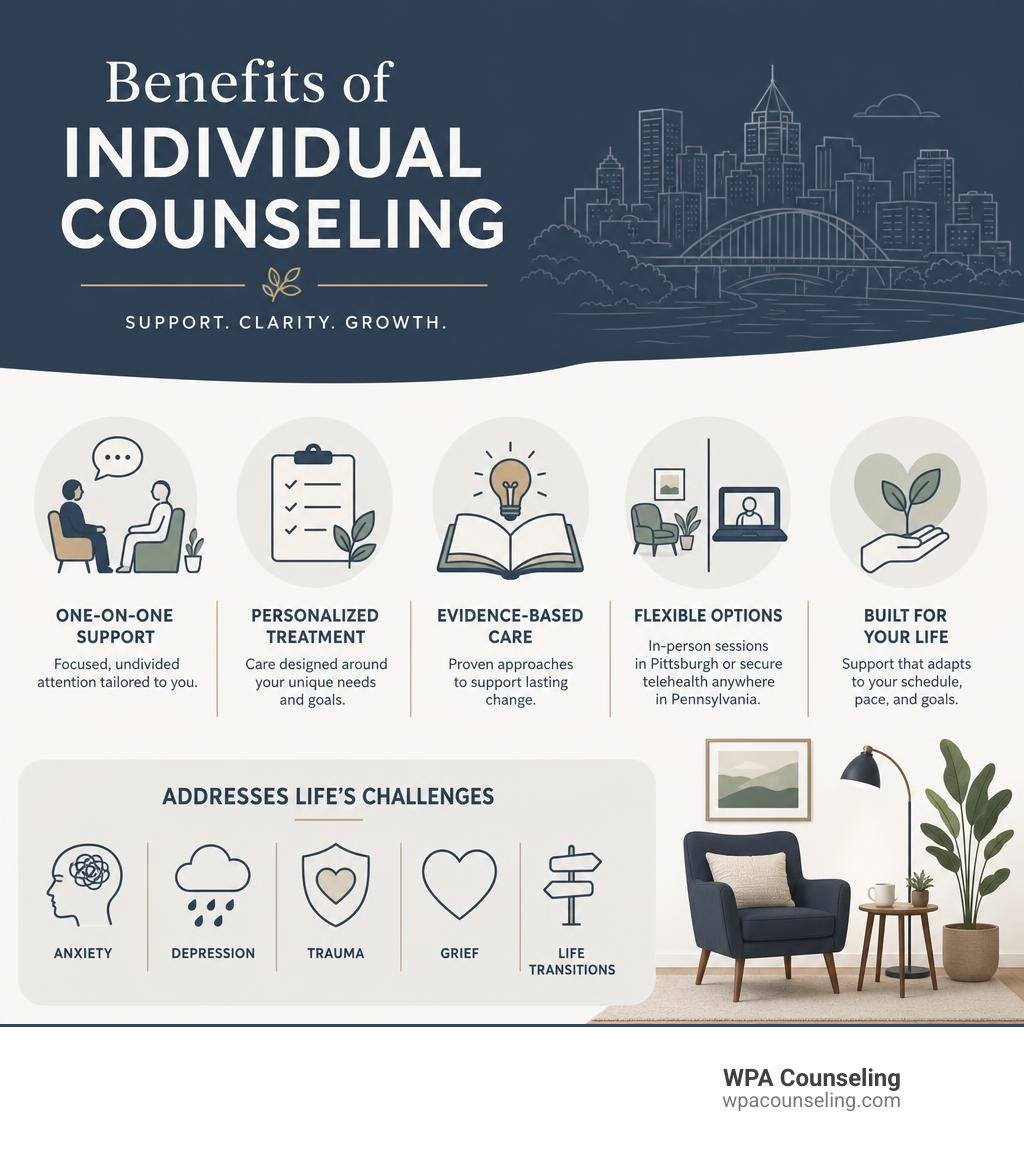
Understanding Individual Counseling Pittsburgh: A Path to Healing
At its core, individual therapy is a collaborative process between you and a trained professional designed to facilitate personal growth, improve emotional regulation, and help you navigate life’s inevitable obstacles. It is a dedicated, confidential hour where the sole focus is your well-being. Unlike talking to a friend or family member — where conversations are naturally a two-way street of sharing and advice — a therapeutic relationship is entirely centered on helping you understand your inner world.
In Western Pennsylvania, we see individuals from all walks of life seeking support. Some are dealing with sudden, intense life changes, while others are trying to untangle long-standing emotional patterns that have kept them feeling stuck for years. No matter where you are on your journey, More info about individual therapy can help you gain clarity, reduce distress, and develop healthier ways of relating to yourself and the world around you.
How Individual Counseling Pittsburgh Differs from Group or Couples Therapy
When exploring therapeutic options, it helps to understand how different formats serve different needs. While couples therapy focuses on the relationship dynamics between partners, and family therapy addresses systemic patterns within a household, individual counseling is uniquely tailored to personalized care and deep self-discovery.
In a couples or family setting, the “client” is essentially the relationship itself. The therapist’s role is to remain neutral, helping both parties communicate more effectively and resolve conflicts. While this is incredibly valuable, it does not leave much room to explore your personal, underlying emotional wounds or individual history.
Individual counseling, on the other hand, allows you to pull back the layers of your own life without worrying about anyone else’s reactions or needs. It provides a safe harbor to explore how your past experiences shape your current behavior, how your nervous system responds to stress, and how you can reclaim control over your personal narrative. For those seeking this targeted, deeply personal focus, Empathetic Individual Therapy in Pennsylvania offers a space where your voice is the only one that needs to be heard.
Common Reasons to Seek Individual Counseling Pittsburgh
There is no “right” or “wrong” reason to start therapy. Some people seek counseling because they are in the midst of an acute crisis, while others are looking for proactive self-improvement or a deeper sense of purpose. In our Western PA offices, we frequently support clients navigating:
- Major Life Transitions: Starting college at one of our local universities, adjusting to parenthood, navigating a divorce, changing careers, or transitioning into retirement.
- Chronic Stress and Burnout: Managing the heavy demands of work, caregiving, or family expectations that leave you feeling physically and emotionally exhausted.
- Grief and Loss: Processing the death of a loved one, the end of a significant relationship, or the loss of a dream.
- Persistent Emotional Distress: Feeling constantly on edge, experiencing sudden mood shifts, or struggling to find joy in things you used to love.
If you are wondering whether your specific struggles warrant professional support, reading about Is Therapy Right for You? can help you identify the signs that it might be time to reach out.
Addressing Anxiety, Depression, and Trauma in Western Pennsylvania
Mental health challenges like anxiety, depression, and trauma can feel incredibly isolating, but they are far more common than most people realize. When these struggles begin to interfere with your daily routine, your relationships, or your ability to perform at work or school, they require more than just “positive thinking” or waiting for things to get better.
At WPA Counseling, we utilize highly effective, evidence-based methods to help you find relief. We do not believe in a one-size-fits-all approach. Instead, we integrate proven modalities like Cognitive Behavioral Therapy (CBT), Dialectical Behavior Therapy (DBT), attachment-based therapy, and trauma-informed care to build a treatment plan that respects your unique story. To learn more about how we address these specific struggles, you can explore More info about anxiety and depression therapy.

Navigating Anxiety and Stress Management
Anxiety is more than just feeling stressed before a big presentation; it is a full-body experience. When anxiety takes over, your sympathetic nervous system goes into overdrive, leaving you with a racing heart, shallow breathing, muscle tension, and a mind that refuses to stop spinning. Over time, chronic anxiety can erode your physical health, disrupt your sleep, and limit your life as you begin to avoid situations that trigger your distress.
In our practice, we help you understand the physiological roots of your anxiety while equipping you with practical coping strategies. Through cognitive behavioral therapy, we work together to identify and challenge the distorted, worst-case-scenario thoughts that fuel your fear. Simultaneously, we incorporate mindfulness and somatic techniques to help calm your nervous system in real-time. If you are ready to regain control over your worries, our specialized Anxiety Therapy can help. For a deeper look at how anxiety manifests and how local counseling can help you find peace, read our guide on Understanding Anxiety Counseling Pennsylvania.
Overcoming Depression and Emotional Hurdles
Depression can feel like walking through wet cement. It saps your energy, distorts your perspective, and whispers the lie that things will never get better. It often leaves people feeling disconnected from their loved ones and struggling with low self-esteem, self-doubt, or a profound sense of emptiness.
Healing from depression is not about forcing yourself to “snap out of it.” It is about gently rebuilding your emotional resilience, establishing small, manageable daily habits, and uncovering the underlying emotional hurdles that are keeping you heavy. Our compassionate approach to Depression Therapy focuses on helping you reconnect with your values, quiet your inner critic, and rediscover a sense of hope and vitality. To better understand the complex nature of this condition and how to take your first steps toward recovery, check out Understanding Depression: A Comprehensive Guide.
Healing from Trauma and Emotional Wounds
Trauma is not just about what happened to you in the past; it is about how those past experiences continue to live in your body, your thoughts, and your relationships today. Whether you are dealing with the aftermath of a single shocking event or the lingering effects of chronic childhood emotional neglect, trauma can leave you feeling constantly unsafe, hyper-vigilant, or emotionally numb.
Our trauma recovery process is deeply rooted in safety, pacing, and attachment-based therapy. We understand that healing from trauma requires a gentle, respectful approach that honors your boundaries and never forces you to share more than you are ready to. By exploring how past relational wounds impact your current patterns of connection, we help you foster genuine emotional healing and build a secure foundation within yourself. If you are ready to begin processing these deeper wounds, you can learn more about our approach to Healing from Trauma.
The Counseling Blueprint: Our Four-Stage Healing Journey
At WPA Counseling, we believe that real, lasting change happens when therapy follows a thoughtful, structured, yet highly personalized path. We call this framework the Counseling Blueprint. This four-stage healing journey is designed to take you from a place of survival and emotional exhaustion to a life of authentic connection, self-compassion, and empowerment.
Rather than just treating surface-level symptoms, our Counseling Blueprint focuses on the therapeutic relationship as the primary catalyst for change. We walk alongside you through each of these stages, ensuring you never feel rushed or alone in the healing process. To learn more about how this framework guides our work together, visit our page on Counseling for Individuals.
Stage 1 and 2: Take Off the Mask and Heal the Wounds
The first stage of our Counseling Blueprint is Take Off the Mask. In a world that often demands we “fake it to make it” or pretend we have everything under control, therapy is the one place where you can drop the act. Here, we focus on building genuine rapport and deep trust. We meet you exactly where you are, creating a warm, non-judgmental space where you can share your rawest thoughts, fears, and struggles.
Once a solid foundation of trust is established, we transition into Stage 2: Heal the Wounds. This is where we gently explore the emotional hurts, past traumas, and relational wounds that have shaped your current patterns. Together, we look at the origin of your pain — not to dwell on the past, but to understand how it is currently impacting your self-esteem, your relationships, and your daily life in Western Pennsylvania.
Stage 3 and 4: Remove the Toxins and Replace with Truth
As we identify the sources of your pain, we move into Stage 3: Remove the Toxins. Over time, difficult life experiences often leave us with toxic, unhelpful beliefs and lingering lies about who we are — such as “I am not enough,” “I am unsafe,” or “I have to be perfect to be loved.” In this stage, we work actively to identify, challenge, and dismantle these destructive narratives using evidence-based cognitive and emotional tools.
Finally, we reach Stage 4: Replace with Truth. It is not enough to simply remove the negative beliefs; we must replace them with empowering, accurate, and compassionate perspectives about yourself, others, and the world. This is the stage of truth restoration, where you learn to internalize your worth, establish healthy boundaries, and step into a more confident, resilient version of yourself.
Our Professional Background and Licensed Pennsylvania Counselors
WPA Counseling has served the Western Pennsylvania community for years, establishing a trusted local practice history rooted in clinical excellence and compassionate care. Our team consists of highly skilled, licensed professional counselors who bring decades of combined clinical experience across diverse therapeutic settings, including community mental health, private practice, and specialized outpatient care. Over the years, we have helped hundreds of individuals in the greater Pittsburgh area navigate complex mental health challenges, utilizing evidence-based, counseling-focused strategies to foster long-term healing and resilience.
We understand that convenience and comfort are essential parts of the therapeutic process. That is why we offer flexible options to fit your lifestyle:
- In-Person Counseling: We provide comfortable, private therapy spaces at our offices in the Irwin/North Huntingdon area and our Penn Hills office, making us easily accessible to residents throughout Western PA and the greater Pittsburgh area.
- Secure Telehealth Therapy: If you have a busy schedule, transportation challenges, or simply prefer the comfort of your own home, we offer secure, HIPAA-compliant virtual sessions available to anyone living in the state of Pennsylvania.
To learn more about our team and how we can support your mental health journey, explore our resources on Licensed Mental Health Support in Pennsylvania and find the closest office on our Locations page.
Frequently Asked Questions About Therapy in Pittsburgh
How long does individual counseling typically last?
The duration of individual counseling is highly personalized and depends entirely on your unique goals, the complexity of the issues you want to address, and your personal pace of healing.
Generally, session frequency is scheduled weekly or biweekly to maintain therapeutic momentum and build a strong relationship with your counselor. Some clients find that short-term therapy (typically 12 to 20 sessions) focused on practical coping strategies and stress management is exactly what they need. Others choose to engage in longer-term, depth-oriented therapy to process complex trauma or navigate ongoing life transitions.
Throughout your time with us, we regularly engage in progress monitoring to ensure that therapy continues to feel helpful, relevant, and aligned with your evolving needs. If you are trying to decide if now is the right time to start, you can review our article on When to See a Therapist: 10 Signs You Should Not Ignore.
How do I choose the right therapist in the Pittsburgh area?
Finding the right counselor is one of the most important factors in determining the success of your therapy. Research consistently shows that the quality of the therapeutic alliance — the trust, warmth, and collaboration between you and your counselor — is the single greatest predictor of positive outcomes.
When choosing a therapist, consider their clinical specialties, their experience working with your specific concerns, and their overall therapeutic approach. At WPA Counseling, we take the stress out of this process through our thoughtful therapist matching system. We listen to your needs, preferences, and goals, and match you with a compatible licensed professional who is uniquely equipped to walk alongside you. For more tips on finding the best fit for you locally, read our guide on Real Talk in Real Life: Top In-Person Therapists in Pittsburgh.
Are virtual and in-person sessions both effective?
Yes, absolutely. Extensive clinical research has demonstrated that secure telehealth is just as effective as traditional in-person therapy for a wide range of mental health concerns, including anxiety, depression, and stress management.
The choice between virtual and in-person sessions ultimately comes down to your personal preferences and lifestyle:
- In-Person Therapy offers a dedicated, physical space away from your daily environment, which many clients find helpful for focusing entirely on their emotional healing.
- Secure Telehealth offers unmatched accessibility and flexibility, allowing you to meet with your counselor from your home, office, or any private space in Pennsylvania without the need to commute.
Many of our clients even enjoy a hybrid approach, utilizing telehealth when weather, travel, or busy schedules make it difficult to get to our Irwin or Penn Hills offices.
Conclusion
Your emotional well-being is the foundation of everything else in your life — your physical health, your relationships, your career, and your overall sense of peace. When that foundation is shaken by anxiety, depression, past wounds, or the sheer weight of everyday life, seeking professional support is not a sign of weakness. It is a courageous, proactive step toward building a healthier, more authentic future.
At WPA Counseling, we are dedicated to helping you navigate this path with compassion, professional expertise, and a structured approach that respects your individual story. Through our Counseling Blueprint, our team of licensed Pennsylvania counselors is ready to help you take off the mask, heal your wounds, remove toxic beliefs, and step into the truth of who you are.
If you are ready to take that next step, we invite you to reach out and experience the benefits of being thoughtfully matched with a compatible professional. Get matched with a counselor today and start your journey toward lasting healing.
This article was researched with AI and heavily edited by Stephen Luther for accuracy and relevance.
Stephen Luther is the Executive Director and Founder of WPA Counseling. He holds a Master’s degree in Education from the University of Georgia and a Master’s degree in Marriage and Family Therapy from Duquesne University. He is a licensed professional counselor in Pennsylvania (LPC).
Since 1997, Steve has been helping children, adolescents, adults, couples, and families overcome emotional and relational challenges. He specializes in working with hurting families, including those with foster, adopted, or traumatized children. Steve uses Attachment-Based Therapy, client-centered therapy, and Therapeutic Parent Coaching to support healing and relationship restoration.
This guide is for educational and spiritual encouragement and is not a substitute for personalized professional counseling. If you are in crisis, please reach out for immediate help.
How to Find Online Depression Therapy Pittsburgh Residents Trust