
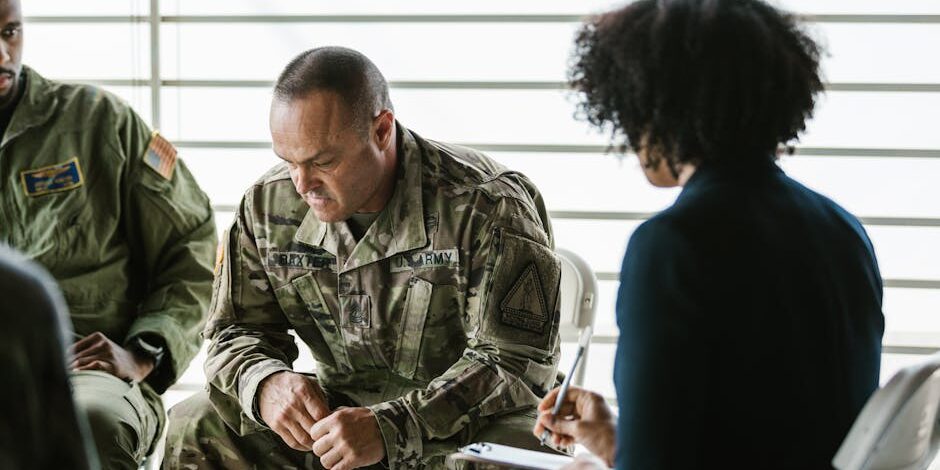
When Trauma Feels Too Heavy to Carry Alone: Finding PTSD Group Therapy in Pittsburgh
PTSD group therapy Pittsburgh residents can access through local and online providers offers a structured, evidence-based path to healing — often alongside others who truly understand what you’re going through.
Quick answer: Where to find PTSD group therapy in Pittsburgh
- Psychology Today’s directory lists trauma and PTSD support groups in the Pittsburgh area, with filters for cost, approach, and demographics
- Zencare lists 8 group practices in Pittsburgh with availability specifically for Complex PTSD (C-PTSD)
- WPA Counseling offers trauma therapy in-person across Western PA and via secure telehealth throughout Pennsylvania
- Groups range from closed, structured programs (9–12 weeks) to ongoing virtual formats
- Specialized groups exist for veterans, survivors of childhood abuse, women, and adult male survivors
Trauma is far more common than most people realize. Around 70% of U.S. adults have experienced at least one traumatic event in their lifetime. In the Pittsburgh area alone, more than 1,400 people sought help for trauma or PTSD in a single recent year.
And yet, many people still try to heal in silence.
That silence can make PTSD symptoms worse — the flashbacks, the hypervigilance, the sense that no one could possibly understand. Group therapy offers something powerful that silence can’t: shared experience. Sitting with others who have walked through similar pain can be one of the most validating moments in a person’s healing journey.
This guide is for anyone in the Pittsburgh area searching for that kind of support — whether you’re newly diagnosed, years into recovery, or simply not sure where to start.
Understanding the Role of PTSD Group Therapy Pittsburgh

When we think of therapy, we often picture one person sitting in a room with a clinician. While individual work is vital, PTSD group therapy Pittsburgh programs provide a unique layer of healing: validation. In our city, from the North Side to the South Hills, individuals are discovering that they aren’t the only ones jumping at loud noises or struggling to sleep.
The primary role of group therapy is to break the cycle of isolation. Trauma often tells us that we are “broken” or “different.” When you enter a room (or a secure virtual space) with seven other Pittsburghers who share those same feelings, that lie begins to crumble. Recognizing PTSD symptoms is the first step, but realizing those symptoms are a normal response to abnormal events is where the real work begins.
Local resources like Navigating PTSD strategies and support can help Pittsburgh-area residents find guidance, connection, and practical next steps when peer support matters most.
Benefits of Group vs. Individual PTSD Group Therapy Pittsburgh
Why choose a group when you could have a therapist’s undivided attention? It’s not about one being “better” than the other; it’s about what your nervous system needs right now.
- Social Connection: Trauma often leads to withdrawal. Groups force a gentle re-entry into social spaces.
- Reduced Isolation: Seeing someone else nod while you describe a flashback is more healing than any textbook definition.
- Cost-Effectiveness: Group sessions are often significantly more affordable than individual hours, making long-term support sustainable.
- Perspective: You might find it easier to offer compassion to a peer than to yourself. Eventually, that compassion circles back to you.
Understanding trauma therapy involves knowing that healing is a multi-faceted process. For many, the group acts as a “social laboratory” where they can practice setting boundaries or expressing emotions in a safe, controlled environment.
Navigating the Healing Process in a Group Setting
Entering a group can feel intimidating. We get it—walking into a room of strangers to talk about your hardest days sounds like a lot. However, modern PTSD group therapy Pittsburgh is designed with safety as the priority.
The process usually begins with rapport building. You aren’t expected to spill your life story on day one. Instead, facilitators focus on creating a “container” of safety. From there, the group moves toward empowerment. You learn that you are the expert on your own life, and the group is simply the wind at your back. By navigating PTSD strategies and support together, members often find they progress faster than they would alone.
Evidence-Based Techniques Used in Pittsburgh Trauma Groups
In the Steel City, we value things that work. The same applies to our mental health. Pittsburgh trauma groups don’t just “talk”; they utilize specific, scientifically backed methods to help the brain reprocess traumatic memories.
Two of the heavy hitters are Cognitive Behavioral Therapy (CBT) and Dialectical Behavior Therapy (DBT).
- CBT helps you identify the “stuck points”—those unhelpful thoughts like “It was my fault” or “The world is 100% dangerous”—and gently challenges them.
- DBT is fantastic for emotional regulation. If your emotions feel like a Pittsburgh flash flood, DBT gives you the “dams” and “channels” to manage that flow.
To learn more about how these work, you can explore how trauma therapy explained breaks down the mechanics of brain change. You can also find practitioners using these methods through Trauma and PTSD Support Groups in Pennsylvania.
Specialized Modalities for PTSD Group Therapy Pittsburgh
Beyond standard talk therapy, specialized modalities are becoming the gold standard in Western PA.
- EMDR (Eye Movement Desensitization and Reprocessing): While often done individually, Group EMDR (G-TEP) is a rising star. It allows participants to process trauma privately within a group setting, often using “bilateral stimulation” like tapping or eye movements.
- Cognitive Processing Therapy (CPT): This is a structured, 12-session protocol often used in groups to help members understand how trauma changed their view of safety, trust, power, and intimacy.
Many of these are now available through online therapy for trauma recovery, providing flexibility for those in Westmoreland County or Penn Hills who may not want to fight Parkway traffic to get to a session.
Somatic and Holistic Approaches to Recovery
We know that trauma isn’t just “in your head”—it’s in your body. It’s the tight chest, the restless legs, and the constant “fight or flight” feeling. That’s why many Pittsburgh groups incorporate somatic (body-based) techniques.
These might include:
- Nervous System Regulation: Learning how to breathe your way out of a panic attack.
- Mind-Body Connection: Using mindfulness to notice where stress lives in your shoulders or stomach.
- Truth Restoration: At WPA Counseling, we focus on restoring the truth of who you are, stripping away the “toxins” that trauma left behind.
Following healing from trauma proven steps often requires this holistic look at the self. It’s about more than just “getting over it”; it’s about coming home to your body.
Specialized Programs for C-PTSD and Veterans in Western PA

Not all trauma is the same. A single car accident is a different experience than years of childhood neglect or multiple combat deployments. Fortunately, Pittsburgh has specialized programs for these specific needs.
Complex PTSD (C-PTSD), often called developmental trauma, usually stems from repeated, long-term exposure to difficult situations. This could be childhood emotional abuse or a long-term domestic violence situation. Because C-PTSD impacts trust and self-esteem so deeply, group therapy is particularly effective—it provides a “re-parenting” environment where you can learn what healthy relationships actually look like.
For those in our outlying areas, Support Groups in Westmoreland County, PA offer local options that understand the specific needs of our communities.
Addressing the Unique Needs of Pittsburgh Veterans
Pittsburgh is a city with deep military roots. From the VA in Oakland to local VFWs, our veterans have access to specialized care that understands military culture.
Combat trauma requires a specific type of peer mentorship. Veterans often feel that civilians “just don’t get it.” In a veteran-specific PTSD group therapy Pittsburgh setting, that barrier is gone. Members can discuss the nuances of service, the transition to civilian life, and the specific weight of combat-related PTSD. This specialized trauma recovery focus ensures that those who served our country are served in return.
Support for Complex PTSD (C-PTSD) and Narcissistic Abuse
One of the most requested types of support in 2026 involves healing from narcissistic abuse. This type of relational trauma can leave you questioning your own reality (gaslighting).
Group therapy for this population focuses on:
- Boundary Setting: Learning that “no” is a complete sentence.
- Identifying Manipulation: Recognizing the “love bombing” and “trauma bonding” cycles.
- Reclaiming Self-Worth: Realizing that the abuse was a reflection of the abuser, not the victim.
Understanding the 3 powerful stages of trauma recovery is vital here, as the “toxin removal” stage is often the most intense for survivors of emotional abuse.
| Feature | In-Person Group Therapy | Online Group Therapy |
|---|---|---|
| Accessibility | Best for those near Pittsburgh/Irwin | Best for all of Pennsylvania |
| Connection | Physical presence and non-verbal cues | Comfort of your own home/safe space |
| Commute | Requires travel (Parkway/PA Turnpike) | Zero travel time |
| Privacy | High (professional office setting) | High (secure, encrypted platforms) |
| Ideal For | Those needing to “get out of the house” | Those with busy schedules or social anxiety |
Understanding childhood trauma is often the foundation for these groups, as many adult relational patterns are rooted in early experiences.
WPA Counseling: Clinical Excellence in Pennsylvania Trauma Care
At WPA Counseling, we aren’t just a directory; we are a dedicated team of licensed professional counselors who call Western Pennsylvania home. Headquartered in Irwin, PA, our practice has a long-standing history of providing specialized trauma support to the local community. Our clinical experience is built on years of dedicated service, utilizing evidence-based counseling strategies to help residents navigate the complexities of PTSD. We have established a reputation for excellence in Western and Central Pennsylvania, combining professional expertise with a deep understanding of our region’s unique needs. Whether you’re visiting us in person at our offices throughout Western and Central PA or joining us via secure telehealth from your living room in Penn Hills, our goal is the same: to provide a safe harbor for your healing. We specialize in Pennsylvania trauma counseling that goes beyond surface-level fixes.
Our Compassionate History of Providing Care
Our roots in the community run deep, with a practice history centered on providing accessible, high-tier mental health services. We understand the specific stressors of living in the Pittsburgh metro area—from the economic shifts to the unique ‘Pittsburgh stoicism’ that sometimes makes it hard to ask for help. Our professional background is steeped in trauma counseling Western PA history, where we have spent years refining our clinical approach to ensure that every client receives personalized, compassionate care. We know that a ‘one-size-fits-all’ approach doesn’t work for PTSD, which is why we emphasize a journey rooted in clinical integrity and local trust.
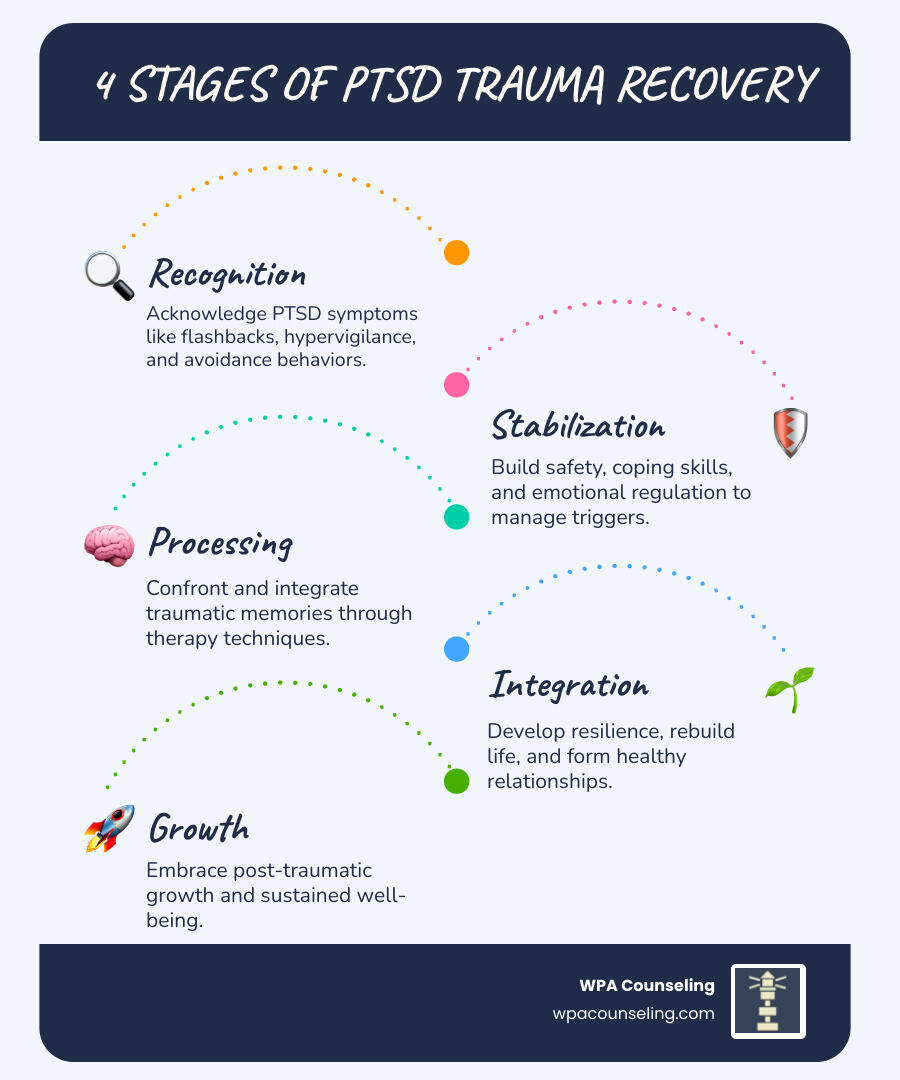
The Four-Stage Healing Process
We use a proprietary four-stage healing process designed to move you from surviving to thriving. This isn’t about rushing; it’s about doing the work right.
- Rapport & Safety: We start by building a rock-solid relationship. You can’t heal if you don’t feel safe.
- Wound Exploration: We gently look at the “how” and “why” of your trauma.
- Toxin Removal: This is where we identify the lies trauma told you (e.g., “I’m unlovable”) and work to remove them from your system.
- Truth Restoration: Finally, we help you rediscover your inherent worth and strength.
We believe how to find the right therapist for trauma in Pennsylvania shouldn’t be a guessing game. Our “thoughtful matching” process ensures you are paired with a counselor whose expertise aligns with your specific needs.
Logistics: Costs, Insurance, and Finding a Group in 2026
Let’s talk about the practical side. Healing shouldn’t break the bank. In 2026, most PTSD group therapy Pittsburgh providers accept major insurance plans.
If you are a resident of Western PA, you likely have UPMC or Highmark BCBS. These are widely accepted, along with Aetna, Cigna, and United/Optum. For many, group therapy is covered with a standard specialist co-pay, making it one of the most accessible ways to receive trauma therapy Pittsburgh services.
Insurance Acceptance and Self-Pay Options
For those without insurance or who prefer to pay out-of-pocket for increased privacy, self-pay rates for groups typically range from $40 to $100 per session.
- Sliding Scales: Many Pittsburgh practices offer sliding scale fees based on income.
- Victim’s Compensation: If your PTSD is the result of a crime, you may be eligible for Pennsylvania’s Victim’s Compensation Assistance Program, which can cover the cost of counseling.
By looking into trauma therapy in Pittsburgh start your healing today, you can find a plan that fits your budget.
How to Join a Pittsburgh Support Group
Joining a group isn’t usually as simple as just “showing up.” Most reputable programs have a short intake process.
- Initial Inquiry: You reach out via email or phone.
- Screening/Intake: A facilitator will meet with you for 15–30 minutes to ensure the group is a good fit for your current needs.
- Clinical Readiness: They will check to see if you have enough coping skills to handle group discussions without becoming overwhelmed.
- Commitment: Many PTSD groups are “closed,” meaning once the 8 or 12 weeks start, no new members join. This helps build deep trust among the participants.
Frequently Asked Questions about PTSD Group Therapy
Is group therapy as effective as individual therapy for PTSD?
Yes. Research consistently shows that group therapy can be just as effective as individual therapy for reducing PTSD symptoms. In some cases, the “peer factor” actually makes it more effective for reducing shame and isolation. Many people find that a combination of both individual and group work is the “sweet spot” for recovery.
Do I have to share the specific details of my trauma in a group?
In many modern groups, like those using the G-TEP (Group EMDR) protocol, you are not required to share the details of your trauma with the group. You can process the “biological” charge of the memory privately while still benefiting from the group’s support and grounding exercises. Always ask the facilitator about the “level of disclosure” required before joining.
Are there online PTSD group therapy options for Pittsburgh residents?
Absolutely. In 2026, virtual groups are more popular than ever. They are held via secure, HIPAA-compliant video platforms. This is a great option for residents in North Huntingdon or more rural parts of Western PA who want to connect with a specialized Pittsburgh-based group without the long drive.
Conclusion
Healing from trauma is not a solo sport. While the journey is yours, you don’t have to walk the path alone. Whether you find your home in a small group in Irwin or a virtual circle connecting survivors across Pennsylvania, the act of reaching out is your first victory.
Resilience is a hallmark of the Pittsburgh spirit. We’ve seen it in our history, and we see it every day in our clients who are engaging life after trauma. You deserve to feel safe in your body, confident in your relationships, and hopeful about your future.
If you’re ready to take the next step, we invite you to contact WPA Counseling. Whether you are looking for individual support or a group-based path to healing, our team is here to help you move forward with clarity, connection, and care.
This article was researched with AI and heavily edited by Stephen Luther for accuracy and relevance.
Stephen Luther is the Executive Director and Founder of WPA Counseling. He holds a Master’s degree in Education from the University of Georgia and a Master’s degree in Marriage and Family Therapy from Duquesne University. He is a licensed professional counselor in Pennsylvania (LPC).
Since 1997, Steve has been helping children, adolescents, adults, couples, and families overcome emotional and relational challenges. He specializes in working with hurting families, including those with foster, adopted, or traumatized children. Steve uses Attachment-Based Therapy, client-centered therapy, and Therapeutic Parent Coaching to support healing and relationship restoration.
This guide is for educational and spiritual encouragement and is not a substitute for personalized professional counseling. If you are in crisis, please reach out for immediate help.
This Might Be Why Counseling Didn’t Work for You Before
What Nobody Tells You About Getting Grief Counseling