
Finding Anxiety Help in Pittsburgh Starts With One Clear Step
If Pittsburgh anxiety is making daily life feel harder, start by contacting a licensed counselor, checking your insurance or payment options, and choosing between in-person and secure telehealth sessions. You do not need to wait until anxiety becomes a crisis to ask for help.
At WPA Counseling, we offer anxiety therapy in Western Pennsylvania, with in-person counseling in Irwin/North Huntingdon and Penn Hills, plus secure telehealth anywhere in Pennsylvania. Our licensed professional counselors help people work through constant worry, panic, stress, trauma, relationship strain, and the beliefs that keep them feeling stuck.
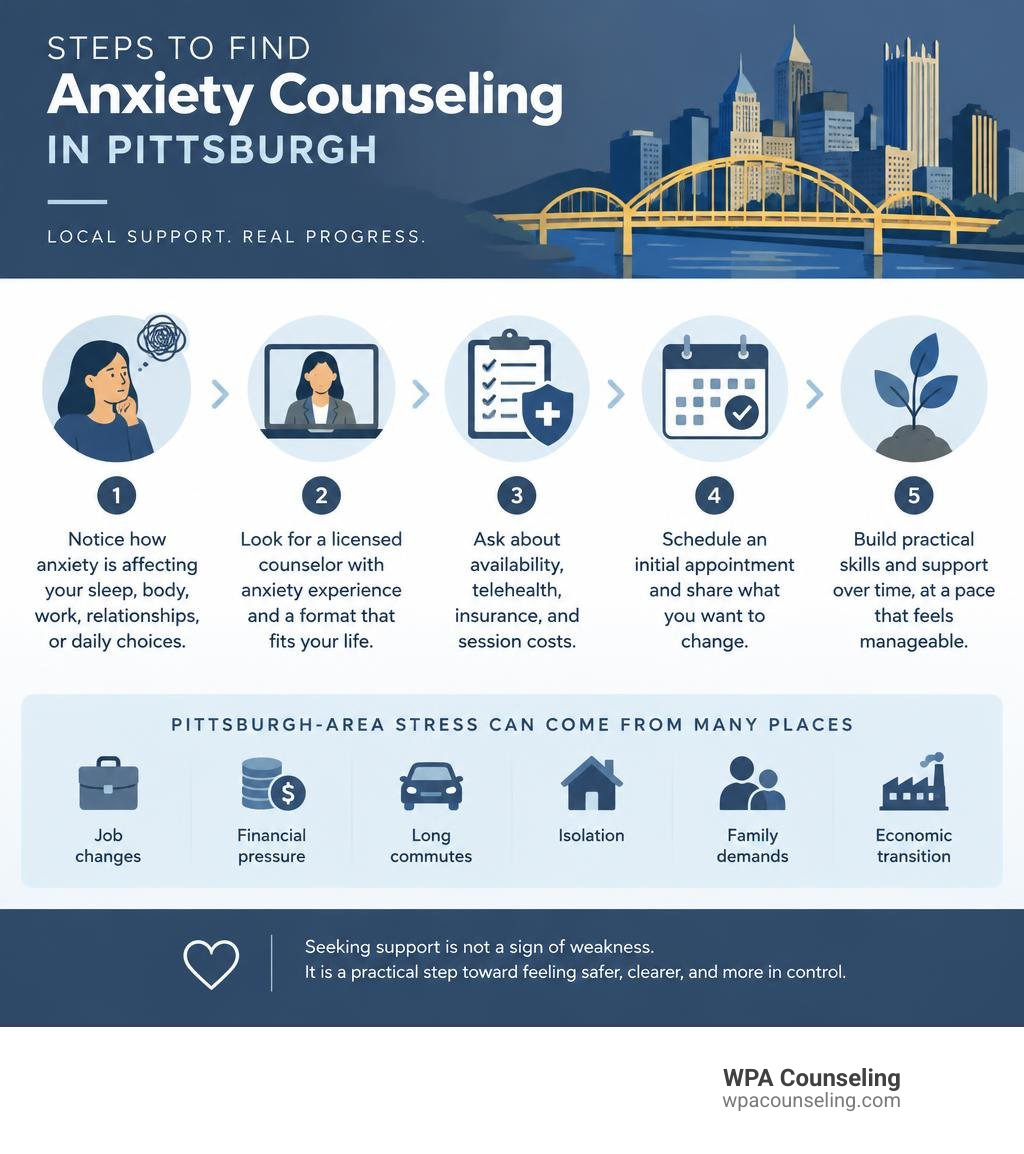
Pittsburgh-area stress can have many layers: job changes, financial pressure, long commutes, isolation, family demands, and the lasting effects of a changing regional economy. Local data also points to a real need for support. In Allegheny County, 15.3% of adults reported frequent mental distress in 2021, and young adults have reported especially high levels of anxiety symptoms.
A simple path to getting help:
- Notice how anxiety is affecting your sleep, body, work, relationships, or daily choices.
- Look for a licensed counselor with anxiety experience and a format that fits your life.
- Ask about availability, telehealth, insurance, and session costs.
- Schedule an initial appointment and share what you want to change.
- Build practical skills and support over time, at a pace that feels manageable.
Seeking support is not a sign of weakness. It is a practical step toward feeling safer, clearer, and more in control.
Understanding Pittsburgh Anxiety: Environmental, Cultural, and Economic Triggers
Living in Western Pennsylvania brings distinct strengths, but it also carries unique stressors. The phrase “Pittsburgh anxiety” refers to the specific intersection of local geography, post-industrial economic transition, cultural norms, and environmental factors that shape how residents experience chronic worry, panic, and emotional overwhelm.

Pittsburgh’s identity was forged in heavy industry. While the region has made remarkable strides into healthcare, education, and technology, the legacy of rapid industrial shifts left lasting marks on families and communities. The loss of stable manufacturing jobs over past decades disrupted generational security, often leaving families to navigate economic uncertainty, career reinvention, and shifting neighborhood dynamics.
Beyond economics, Western Pennsylvania’s physical landscape directly influences mental wellbeing. Our steep valley topography, winding river systems, and dramatic weather patterns create real daily hurdles. Pittsburgh ranks among the cloudiest metropolitan areas in the nation, and the long stretches of overcast skies during fall and winter can intensify nervous system dysregulation, seasonal depression, and chronic fatigue. Navigating complex terrain—tunnels, dozens of bridges, and intense rush-hour bottlenecks—adds baseline physiological stress to everyday commutes.
Unique Local Triggers Fueling Pittsburgh Anxiety
Several distinct regional elements contribute to the heightened anxiety reported across our communities:
- Environmental Factors and Geography: River valleys can trap ambient pollution and particulate matter, which research increasingly links to heightened systemic inflammation and neurological stress. The sheer physical isolation of certain hilltop neighborhoods and valley communities can also heighten feelings of disconnection.
- Generational Blue-Collar Stoicism: Western Pennsylvania culture prides itself on grit, resilience, and hard work. However, this admirable work ethic can unintentionally reinforce emotional suppression. Many residents were raised with the idea that admitting to emotional struggle is a personal flaw, making it harder to recognize the signs to see a therapist before symptoms become overwhelming.
- The Modern Economic Divide: As Pittsburgh transforms into a tech and medical hub, the rising cost of housing and daily essentials creates friction for long-time working-class families. Managing savings, career changes, and rising living expenses often fuels persistent financial worry.
- Infrastructure Stress: Anyone who drives the Fort Pitt Tunnel or crosses the Liberty Bridge during peak hours knows the sudden spike of physical tension that traffic merges can produce. Over time, repeated daily transportation hassles keep the autonomic nervous system in an elevated state of alert.
Demographic Disparities and Mental Health Statistics in Allegheny County
Anxiety is not distributed evenly across the population; demographic factors such as age, income, and neighborhood resources significantly impact who experiences severe stress and who can access care.
According to regional health surveys and federal data, local rates of mental health challenges outpace many national benchmarks. The CDC reports that anxiety and depression symptoms have risen sharply among adults in metropolitan areas, and between 2019 and 2022, anxiety-related emergency department visits in Pittsburgh-area hospitals surged by 38%, highlighting how often individuals reach a breaking point before finding sustainable outpatient support.
Young adults are feeling this burden acutely. Nearly 1 in 4 young adults (ages 18–29) in the Pittsburgh metropolitan area report moderate to severe anxiety symptoms, driven by economic transitions, career establishment hurdles, and digital burnout. Furthermore, historical neighborhood disinvestment and healthcare disparities mean that historically underserved communities in Allegheny County frequently face longer wait times and fewer neighborhood-based mental health resources.
| Region / Demographic Focus | Anxiety or Frequent Mental Distress Prevalence | Key Contextual Insight |
|---|---|---|
| United States (National) | ~19.1% of adults | Represents annual diagnosed anxiety disorders nationwide. |
| Pennsylvania (Statewide) | ~20.2% of adults | State average sits slightly above the broader national baseline. |
| Allegheny County (Adults) | ~15.3% frequent mental distress | Residents reporting 14+ days of poor mental health per month. |
| Pittsburgh Metro (Ages 18–29) | Nearly 25% (1 in 4) | Highest age bracket reporting moderate to severe anxiety. |
| Pittsburgh Hospital Systems | +38% increase (2019–2022) | Marked rise in emergency room visits for acute anxiety episodes. |
Step-by-Step Guide to Finding Anxiety Treatment in Western Pennsylvania
Navigating mental health care can feel daunting, particularly when anxiety itself saps your executive functioning and energy. Following a clear, sequential path can transform an overwhelming search into manageable milestones.
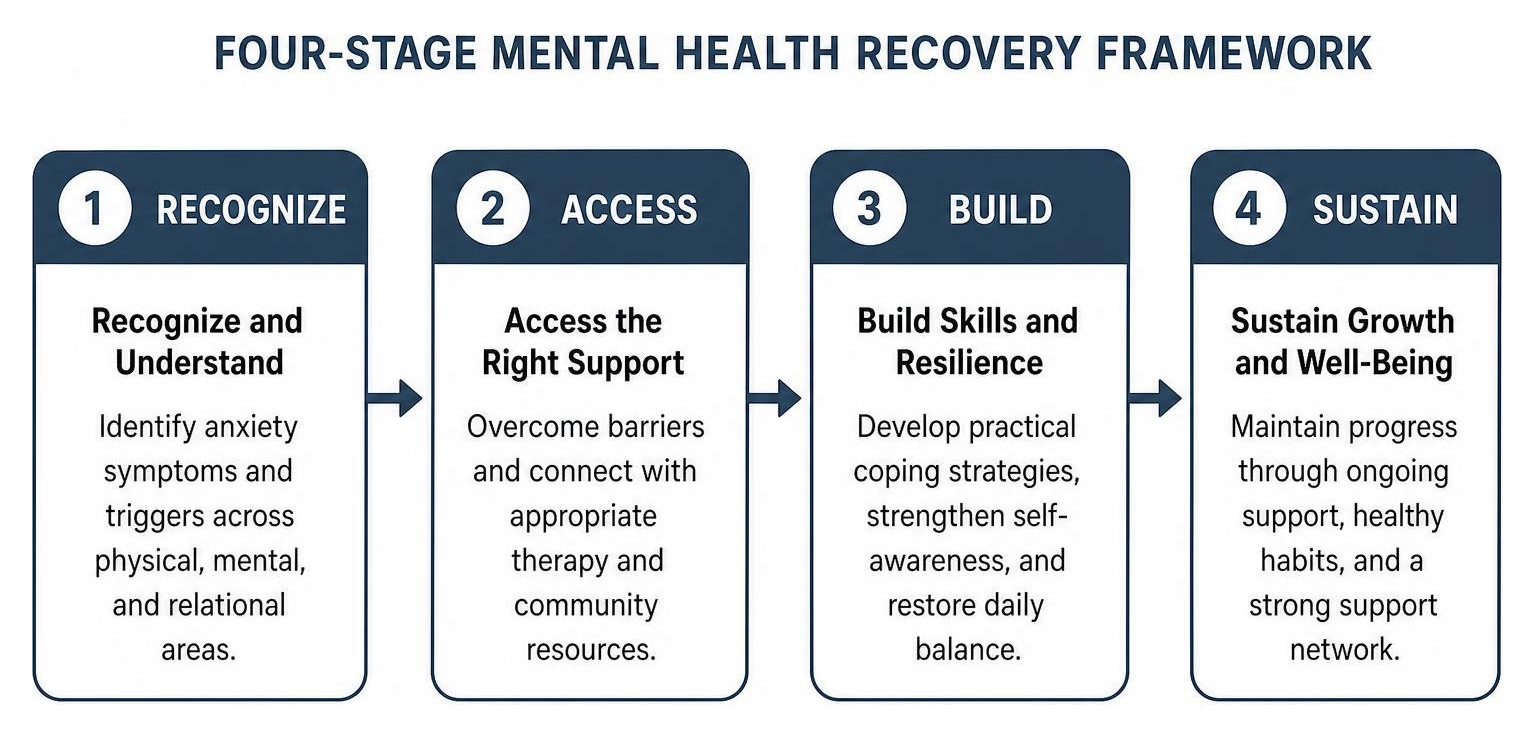
Step 1: Identifying Anxiety Symptoms and Overcoming Care Barriers
The first step in finding the right support is clarifying how anxiety shows up in your day-to-day life. Anxiety is not just “worrying too much”; it manifests physically, mentally, and relationally:
- Physical symptoms: Muscle tension (especially jaw, neck, and shoulders), racing heart, shallow breathing, digestive issues, chronic insomnia, or sudden panic sensations.
- Cognitive patterns: Catastrophic thinking, persistent “what-if” loops, rumination about past conversations, or perfectionism and over-functioning.
- Behavioral signs: Procrastinating on important tasks, avoiding social gatherings, isolating from friends and family, or difficulty making simple decisions.
When immediate panic strikes, practicing grounded somatic exercises for nervous system regulation—such as paced diaphragmatic breathing, sensory grounding (5-4-3-2-1 technique), or progressive muscle relaxation—can help calm acute physical distress while you put long-term professional care in place.
When evaluating practical considerations like scheduling, insurance, or out-of-pocket costs, taking time to evaluate logistics, therapist fit, and session costs early in the process ensures your therapy remains sustainable over time.
Step 2: Exploring Clinical Modalities and Community Support Networks
Effective anxiety care combines professional, evidence-based therapy with healthy community connections. When choosing a counseling path, it helps to understand the clinical frameworks proven to resolve chronic stress:
- Cognitive Behavioral Approaches: Learning structured cognitive behavioral therapy approaches helps you identify automatic negative thoughts, test cognitive distortions, and systematically reshape self-limiting behaviors.
- Attachment and Relational Therapy: Anxiety often stems from early relational wounds or attachment insecurity. Uncovering these underlying relationship patterns helps create internal safety and stronger boundaries.
- Trauma-Informed and Somatic Care: Because the body stores emotional stress, trauma-informed counseling focuses on nervous system regulation and relational safety without relying on invasive interventions.
- Community Support Groups: Connecting with others who understand chronic worry reduces shame and isolation. Exploring local Pittsburgh anxiety support groups provides practical peer solidarity alongside individual counseling.

Clinical Care and Evidence-Based Counseling Options in Western PA
At WPA Counseling, we believe that emotional healing is both a practical skill-building process and a deeply human, relational journey. As an established group practice of licensed professional counselors rooted right here in Western Pennsylvania, our clinical history is grounded in serving local communities across Allegheny and Westmoreland counties. Over years of dedicated clinical practice, our licensed therapists have helped hundreds of adults, teens, and families navigate debilitating panic, chronic stress, relational conflict, and complex life transitions with evidence-based guidance.
Our clinicians bring extensive clinical experience across cognitive behavioral therapy (CBT), attachment-informed approaches, and counseling-based trauma care. We combine this seasoned professional background with deep familiarity with the regional pressures facing Pittsburgh-area residents, providing thoughtful, individualized care tailored to each person’s unique background and goals.
Evidence-Based Care for Pittsburgh Anxiety: In-Person and Telehealth Options
Whether you are struggling with panic attacks, social avoidance, chronic work burnout, or deep-seated trauma, we tailor our clinical work to fit your specific needs. Our practice provides a full spectrum of outpatient mental health services, including:
- Individual Counseling: Focused, one-on-one therapy for anxiety, depression, life transitions, and self-worth.
- Specialized Anxiety Therapy: Structured, evidence-based interventions for generalized anxiety, panic disorder, and social worry through our comprehensive anxiety therapy services.
- Depression Counseling and Grief Support: Compassionate guidance through seasons of loss, numbness, and sadness.
- Trauma Therapy: Safe, structured emotional and relational healing from past experiences.
- Couples and Family Counseling: Rebuilding secure attachment, communication, and mutual trust within relationships.
- Stress Management and Faith-Sensitive Counseling: Practical nervous system regulation integrated with personal faith and spiritual values for clients who desire a faith-sensitive perspective.
Our therapeutic work is guided by our core Counseling Blueprint, a four-stage journey designed to help you move from feeling overwhelmed to experiencing lasting emotional freedom:
- Take Off the Mask (Building Rapport and Trust): We create a safe, non-judgmental environment where you can drop the exhausting pretense of “having it all together” and be genuinely seen.
- Heal the Wounds (Explaining Emotional and Relational Hurts): We gently explore the underlying experiences, past hurts, and attachment dynamics that drive chronic anxiety and fear.
- Remove the Toxins (Identifying Unhelpful Beliefs): Together, we identify lingering lies, perfectionistic standards, and toxic assumptions that keep your nervous system in a constant state of hypervigilance.
- Replace with Truth (Installing Empowering Perspectives): We help you anchor grounded, life-giving truths about yourself, your worth, and your relationships, equipping you with daily coping skills that last.
We provide in-person counseling at our comfortable offices in Irwin / North Huntingdon and Penn Hills, making quality care accessible to residents throughout Westmoreland and Allegheny counties. For clients seeking maximum flexibility or residing elsewhere in the state, we offer secure telehealth across Pennsylvania, delivering the same high standard of clinical care directly to your home.
Frequently Asked Questions About Anxiety Help in Pittsburgh
Why is anxiety so prevalent in the Pittsburgh area?
Pittsburgh’s high rates of anxiety stem from a blend of regional environmental, economic, and cultural influences. Long periods of overcast weather during winter months impact circadian rhythms and mood regulation. Furthermore, the region’s cultural emphasis on self-reliance and stoicism can lead people to internalize stress rather than seeking early support. Combined with physical infrastructure challenges—such as congested bridge and tunnel commutes—and ongoing economic transitions, local residents face a distinct set of chronic stressors.
What should I look for when choosing an anxiety therapist in Pittsburgh?
Look for a licensed professional counselor (LPC, LCSW, or LMFT) who specializes in anxiety disorders and utilizes evidence-based modalities like Cognitive Behavioral Therapy (CBT), attachment-informed therapy, or trauma-informed counseling. Ensure they offer a format that fits your lifestyle—whether that means an in-person office in Western Pennsylvania or secure online sessions. Just as importantly, prioritize the relational fit: you should feel heard, respected, and emotionally safe with your counselor from your first session.
Are online anxiety therapy sessions as effective as in-person visits?
Yes. Numerous clinical studies show that secure video telehealth is just as effective as in-person counseling for treating anxiety disorders, panic, and depression. Virtual therapy removes barriers like commuting across river bridges or finding childcare, allowing you to practice emotional regulation skills directly within your everyday home environment. Many clients find that telehealth provides greater consistency, privacy, and ease in maintaining regular weekly sessions.
Conclusion
Carrying chronic worry, physical tension, and emotional exhaustion can make the world feel narrow, but you do not have to navigate it on your own. Real recovery is not about eliminating all life stress—it is about understanding your body’s signals, rewiring unhelpful thought loops, and establishing a grounded sense of internal safety.
Whether you prefer meeting face-to-face in Western PA or connecting via virtual therapy from anywhere in the state, compassionate, professional support is readily available. If you are ready to take that first step toward clarity and relief, explore our professional anxiety counseling in Pittsburgh and let our team match you with a licensed counselor who can support your journey toward lasting emotional wellness.
This article was researched with AI and heavily edited by Stephen Luther for accuracy and relevance.
Stephen Luther is the Executive Director and Founder of WPA Counseling. He holds a Master’s degree in Education from the University of Georgia and a Master’s degree in Marriage and Family Therapy from Duquesne University. He is a licensed professional counselor in Pennsylvania (LPC).
Since 1997, Steve has been helping children, adolescents, adults, couples, and families overcome emotional and relational challenges. He specializes in working with hurting families, including those with foster, adopted, or traumatized children. Steve uses Attachment-Based Therapy, client-centered therapy, and Therapeutic Parent Coaching to support healing and relationship restoration.
This guide is for educational and spiritual encouragement and is not a substitute for personalized professional counseling. If you are in crisis, please reach out for immediate help.