Primary Evidence-Based Depression Therapy Options
When exploring depression therapy options, psychological therapies stand at the center of long-term recovery. Research published in World Psychiatry examining over 50,000 patients demonstrates that psychotherapy provides durable, long-lasting relief from depressive symptoms. To learn more about how we approach these modalities, read All About Depression Therapy Options.
Rather than a generic approach, modern psychotherapy uses tailored treatment plans designed around structured skill-building. Depending on how depression affects your daily life, a licensed counselor will select or combine specific evidence-based frameworks to help you process emotions and change harmful patterns.
Cognitive Behavioral Therapy and Behavioral Activation as Core Depression Therapy Options
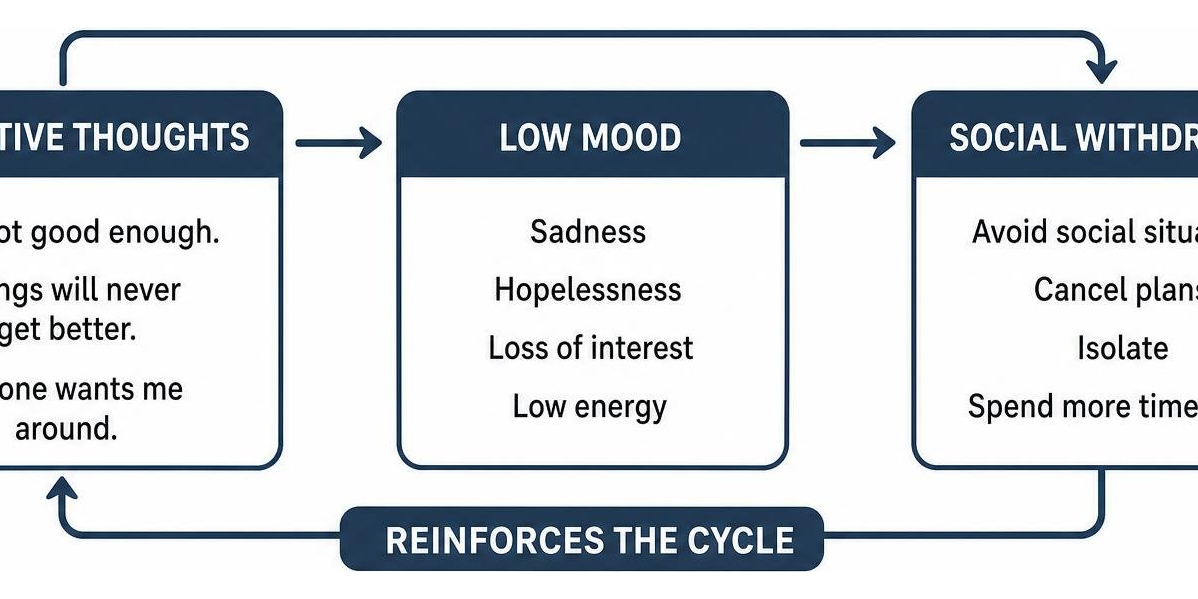
Cognitive Behavioral Therapy (CBT) is considered the gold standard of non-pharmacological depression care. CBT operates on a straightforward premise: our thoughts, feelings, and behaviors are interconnected. When depression takes hold, it creates a confirmation bias loop. For instance, feeling inadequate leads to avoiding social interactions, which leads to isolation, reinforcing feelings of worthlessness.
CBT interrupts this loop through structured techniques:
- Cognitive Restructuring: Identifying automatic negative thoughts and evaluating them objectively using thought records.
- Socratic Questioning: A guided conversation technique where your therapist helps you examine the evidence for and against intrusive thoughts.
- Behavioral Activation: Using behavioral monitoring logs to systematically reintroduce manageable, enjoyable, or meaningful activities into your routine.
Standard courses of CBT generally run between 8 and 20 weekly sessions. If you want to dive deeper into what sessions look like, check out our articles on Cognitive Behavior Therapy for Depression and What to Expect and The Complete Guide to Cognitive Behavioral Therapy.
Interpersonal and Psychodynamic Approaches as Depression Therapy Options
While CBT focuses heavily on thought patterns, other modalities address relational dynamics and underlying emotional wounds. A network meta-analysis of psychotherapies in Focus confirms that Interpersonal Psychotherapy (IPT) and psychodynamic therapy are highly effective first-line treatments. Explore these approaches in detail through our article Beyond the Couch: Exploring Different Types of Therapy for Depression.
Interpersonal Psychotherapy (IPT) typically spans 16 to 20 weekly sessions and connects depressive symptoms directly to interpersonal conflicts and life changes. IPT targets four specific problem areas:
- Grief Resolution: Processing complicated loss or bereavement.
- Role Disputes: Resolving chronic conflicts with partners, family members, or colleagues.
- Role Transitions: Navigating major life shifts such as retirement, job loss, divorce, or becoming a parent.
- Interpersonal Deficits: Building social skills to overcome severe isolation or difficulty initiating relationships.
Psychodynamic therapy takes a deeper, reflective approach. It explores unconscious patterns, past attachment wounds, and dynamic life events to help you gain insight into why certain triggers consistently cause depressive slumps.
Pharmacotherapy: Medications, Dosage Timelines, and Safety
For moderate to severe depression, antidepressant medications are frequently recommended alongside psychotherapy. Antidepressants work by regulating chemical messengers (neurotransmitters) in the brain, including serotonin, norepinephrine, and dopamine. As summarized in clinical reviews from the Mayo Clinic Depression Diagnosis and Treatment Guide and the JAMA Review on Management of Depression in Adults, antidepressant classes include:
- Selective Serotonin Reuptake Inhibitors (SSRIs): Common first-line prescriptions (such as fluoxetine or sertraline) that boost serotonin with generally manageable side-effect profiles.
- Serotonin-Norepinephrine Reuptake Inhibitors (SNRIs): Increase both serotonin and norepinephrine levels, beneficial for patients experiencing fatigue or chronic pain alongside mood symptoms.
- Atypical Antidepressants: Uniquely structured medications like bupropion or mirtazapine that target dopamine or histamine pathways.
- Tricyclic Antidepressants (TCAs) and MAOIs: Older drug classes reserved for treatment-resistant cases due to higher side-effect burdens and dietary restrictions.
Antidepressants are not instant fixes; they usually require 2 to 6 weeks of daily use before noticeable mood improvements occur.
Managing Antidepressant Side Effects and Tapering Safely
When starting an antidepressant, mild side effects like nausea, dry mouth, sleep changes, or lightheadedness may appear during the first two weeks before subsiding.
Safety is critical when initiating or changing doses. According to the NICE Guidelines on Depression in Adults, all antidepressants carry an FDA black box warning regarding an increased risk of suicidal thoughts in children, teenagers, and young adults under age 25 during early weeks of care. Close monitoring by doctors and family members is necessary during this window.
When stopping an antidepressant, never stop abruptly. Suddenly stopping medication can trigger withdrawal symptoms (brain zaps, severe dizziness, flu-like feelings). Physicians use step-down hyperbolic tapering — gradually reducing doses by 25% to 50% using lower-dose tablets or liquid formulations — to safely transition off medication.
Treatment Timeline: Phases, Duration, and Psychoeducation
Recovery from depression happens in structured stages. Medical and psychological guidelines divide treatment into three distinct phases to ensure long-term stability:

| Phase | Typical Duration | Primary Focus |
|---|---|---|
| Acute Phase | 6 to 8 weeks | Symptom reduction, establishing initial therapeutic rapport, stabilizing crisis |
| Continuation Phase | 4 to 9 months | Consolidating skills, maintaining effective medication dosage, preventing early relapse |
| Maintenance Phase | 1 to several years | Long-term prevention for individuals with recurrent, severe, or chronic depression |
The Role of Psychoeducation in Long-Term Relapse Prevention
Psychoeducation is the practice of systematically learning about depression — its biological causes, psychological triggers, and warning signs. Demystifying symptoms reduces self-blame and empowers clients and their families to build lasting emotional stability. To learn more about strengthening your emotional foundation, visit Resilience Building Through Depression Counseling.
Key elements of psychoeducation include:
- Tracking early warning signs (e.g., changes in sleep, withdrawal from hobbies).
- Involving supportive family members or partners in education sessions.
- Learning how stress hormones impact memory, physical energy, and emotional regulation.
Advanced Solutions for Treatment-Resistant Depression
When standard antidepressants and basic therapy protocols do not deliver relief, depression is classified as treatment-resistant or refractory. Landmark psychiatric research, including re-analyses of the STAR*D study, shows that while initial medication trials succeed in about one-third of patients, successive medication switches yield lower response rates.
When single medications fail, prescribers may use medication augmentation — adding a non-antidepressant mood stabilizer or atypical antipsychotic to boost effectiveness.
Brain Stimulation Therapies and Novel Interventions
For severe or treatment-resistant depression, non-invasive and medical procedures offer powerful alternatives:
- Transcranial Magnetic Stimulation (TMS): An FDA-approved outpatient procedure that uses magnetic pulses to stimulate nerve cells in the brain’s dorsolateral prefrontal cortex. Using fMRI neuronavigation and accelerated protocols (such as theta-burst stimulation), TMS restores normal neural activity without requiring general anesthesia.
- Electroconvulsive Therapy (ECT): Performed under general anesthesia, ECT delivers controlled electrical currents to trigger a brief seizure, altering brain chemistry. It achieves up to an 80% response rate in severe, urgent cases.
- Ketamine / Esketamine Therapy: Targets glutamate pathways rather than serotonin, offering rapid symptom reduction for severe depressive crises.
Holistic Approaches, Lifestyle Adjustments, and Digital Therapies
Medical and psychological care work best when supported by daily lifestyle choices. Incorporating whole-person health supports brain function and emotional balance. Read more about integrated wellness strategies in Holistic Approaches in Depression Counseling and learn about convenient online care in How to Find Online Depression Therapy Pittsburgh Residents Trust.
- Physical Exercise: Regular physical activity stimulates Brain-Derived Neurotrophic Factor (BDNF), promoting neuroplasticity and lifting mood.
- Sleep Hygiene & Light Therapy: Establishing predictable circadian rhythms improves baseline mood. For Seasonal Affective Disorder (SAD), sitting before a 10,000-lux light box each morning helps regulate melatonin and serotonin.
- Supplements & Herbal Remedies: While St. John’s wort shows modest benefits for mild depression, it interacts dangerously with prescription antidepressants and birth control pills. Clinical studies show that Omega-3 fatty acids alone are ineffective as a primary treatment.
- Digital Therapies: Regulated health applications and secure teletherapy allow individuals facing transportation or geographical hurdles to access structured care.
Integrating Mind-Body Practices with Professional Care
Mindfulness practices help clients detach from intrusive depressive thoughts. Mindfulness-Based Cognitive Therapy (MBCT) combines standard CBT with an 8-week group protocol focused on body-scan meditations and emotional grounding. If you are navigating concurrent anxiety and mood struggles, check out Mindfulness Meets Emotion: A Complete Guide to DBT for Depression.
Compassionate Depression Care with WPA Counseling in Pennsylvania
At WPA Counseling, our team of licensed Pennsylvania professional counselors provides compassionate, expert support tailored to your unique story. With years of dedicated clinical experience and a rich local practice history serving communities across Western Pennsylvania, our clinicians bring deep expertise and proven outcomes to every session. We specialize in evidence-based care including CBT, DBT skills, attachment-focused work, and trauma-informed counseling.
Our practice uses The Counseling Blueprint, a structured four-stage healing framework:
- Take Off the Mask: Building genuine, non-judgmental trust where you can present your authentic self without fear.
- Heal the Wounds: Safely exploring emotional hurts, past trauma, and the roots of your pain through effective counseling strategies.
- Remove the Toxins: Identifying and stripping away unhelpful beliefs, lingering lies, and self-defeating patterns.
- Replace with Truth: Installing empowering, realistic perspectives about your identity, self-worth, and future.
Our deep local roots allow us to understand the distinct mental health needs of individuals and families throughout the region. We offer convenient in-person counseling at our Western Pennsylvania locations in Irwin/North Huntingdon and Penn Hills, alongside secure HIPAA-compliant telehealth available across all of Pennsylvania. To learn more about our local care options, visit Why In-Person Depression Counseling PA Is Evolving.
Frequently Asked Questions About Depression Therapy
How do I know if I need professional treatment for depression?
If you experience persistent low mood, loss of pleasure in activities you once enjoyed, fatigue, sleep disruptions, or feelings of worthlessness for longer than two weeks, professional support is recommended. Simple two-question screening tools and validated clinical measures like the PHQ-9 help therapists determine symptom severity. Learn more about symptoms in Understanding Depression: A Comprehensive Guide.
What is the most effective therapy for depression?
Research detailed in the NHS Talking Therapy Options Guide shows that CBT, IPT, and behavioral activation are all highly effective. For moderate to severe cases, combining therapy with medication yields the highest long-term remission rates.
How long does depression therapy usually take to work?
Many people experience initial symptom relief within 4 to 8 weeks of regular therapy. Standard therapy courses run 16 to 20 sessions, while medication plans are typically maintained for 4 to 9 months after feeling better to ensure lasting stability.
Conclusion: Finding Your Path to Healing and Hope
Depression can make you feel isolated, but you do not have to navigate recovery alone. With the right depression therapy options — ranging from skilled psychotherapy and medical care to holistic self-care — full recovery is possible.
Taking the first step toward getting help is often the most courageous part of the journey. When you are ready to move forward, we invite you to reach out to us at WPA Counseling. We will carefully match you with a compatible licensed Pennsylvania counselor who can walk alongside you through every phase of healing. Visit our page on Depression Therapy to schedule your initial consultation today.
This article was researched with AI and heavily edited by Stephen Luther for accuracy and relevance.
Stephen Luther is the Executive Director and Founder of WPA Counseling. He holds a Master’s degree in Education from the University of Georgia and a Master’s degree in Marriage and Family Therapy from Duquesne University. He is a licensed professional counselor in Pennsylvania (LPC).
Since 1997, Steve has been helping children, adolescents, adults, couples, and families overcome emotional and relational challenges. He specializes in working with hurting families, including those with foster, adopted, or traumatized children. Steve uses Attachment-Based Therapy, client-centered therapy, and Therapeutic Parent Coaching to support healing and relationship restoration.
This guide is for educational and spiritual encouragement and is not a substitute for personalized professional counseling. If you are in crisis, please reach out for immediate help.