

Depression in Pittsburgh Is More Common Than You Think — and Help Is Here
If you’re looking for depression treatment in Pittsburgh, here’s a quick overview of your main options:
Quick Answer: Depression Treatment Options in Pittsburgh
- Individual Outpatient Therapy — One-on-one counseling (CBT, DBT, trauma-informed) in-person or via secure telehealth
- Holistic Support — Integrating mindfulness, lifestyle adjustments, and emotional wellness strategies
- Crisis Support — Call 988 (Suicide & Crisis Lifeline) or Resolve Crisis Services at 1-888-796-8226 for immediate help
You are not alone. Depression affects roughly one in four women and one in ten men at some point in their lives. On any given year, about one in fifteen people are living with it. That’s a lot of people in our region quietly carrying a very heavy weight.
And yet, when depression is treated well, nearly 90% of people improve. That’s a remarkable number — and a genuinely hopeful one.
Still, getting started can feel impossible when depression itself drains the energy needed to seek help. The condition lies to you. It says nothing will work. It says you’re beyond help. It says don’t bother.
That’s not the truth.
Pittsburgh has a growing network of mental health providers — from community counselors to specialized therapy practices — offering real, evidence-based paths forward. Whether you’re experiencing depression for the first time or you’ve been fighting it for years without finding relief, options exist that are built for exactly where you are.
This guide walks you through what those options look like, how to choose the right fit, and what the road to recovery can realistically look like for someone in Western Pennsylvania.
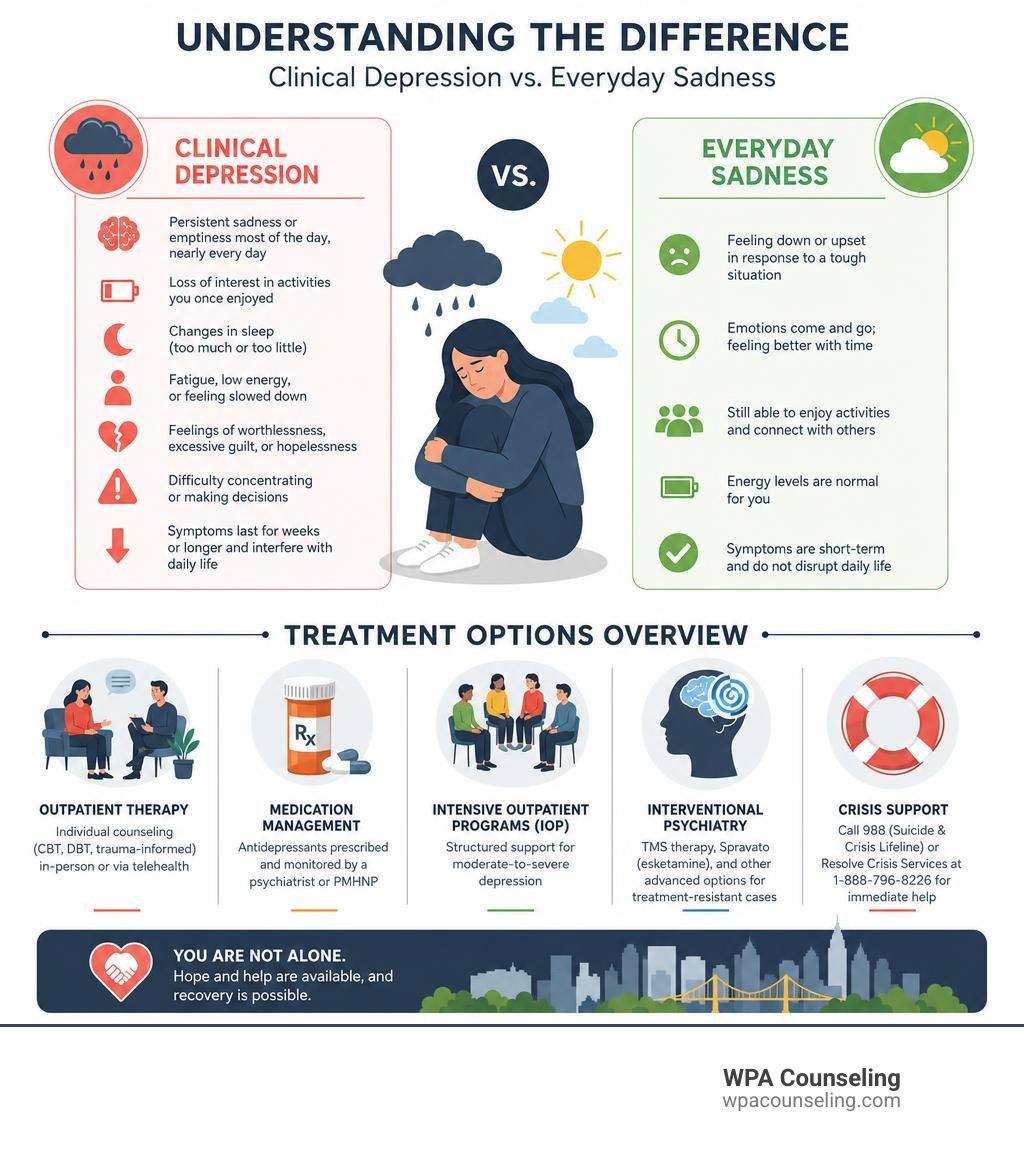
Understanding Depression: Signs, Symptoms, and When to Seek Help

To navigate the landscape of depression treatment Pittsburgh offers, we must first understand what we are fighting. Depression is not a personal failure, a character flaw, or a simple case of the “blues” that you can shake off with a positive attitude. It is a complex, multi-faceted medical condition that alters brain chemistry, energy levels, thought patterns, and physical well-being.
In our clinical experience, we see depression manifest in several distinct ways:
- Major Depressive Disorder (MDD): Characterized by a persistent feeling of sadness, emptiness, and a loss of interest in activities once enjoyed, lasting for at least two weeks.
- Persistent Depressive Disorder (Dysthymia): A chronic form of depression where low mood persists for at least two years. It may feel less intense than MDD, but its long-term nature can make it feel like “just who I am.”
- Seasonal Affective Disorder (SAD): A pattern of depression tied to seasonal changes. This is incredibly common here in Western Pennsylvania, where our gray, overcast winters can significantly impact circadian rhythms and vitamin D levels.
Research, including studies on the Prevention of Incident and Recurrent Major Depression in Older … , highlights how proactive, early interventions can dramatically alter the course of depression. Recognizing the shift from a temporary bad mood to clinical depression is the critical first step. For a deeper look into these dynamics, check out our resource on Understanding Depression: A Comprehensive Guide.
Recognizing the Warning Signs of Clinical Depression
How do you know if what you are experiencing is a clinical condition rather than a temporary rough patch? Depression shows up differently in everyone, but there are core warning signs to look out for:
- Persistent Fatigue: Feeling physically and emotionally drained, where even small tasks like washing dishes or answering an email feel like climbing Mt. Washington.
- Sleep Disturbances: Insomnia (trouble falling or staying asleep) or hypersomnia (sleeping twelve hours a day but still waking up exhausted).
- Loss of Interest (Anhedonia): A complete lack of pleasure in hobbies, social interactions, or work that you used to love.
- Cognitive Fog: Difficulty concentrating, making simple decisions, or remembering details.
- Emotional Turmoil: Feelings of worthlessness, excessive guilt, or sudden irritability.
Often, depression does not travel alone. It frequently co-occurs with anxiety, creating a exhausting cycle where your mind is simultaneously racing with worry and weighed down by hopelessness. We explore this intersection extensively in our guide, Anxiety Depression: The Battle of the Fight to Stay Present.
Navigating Persistent or Severe Depression
When standard self-care practices or lifestyle changes fail to lift the fog, it’s a sign that professional therapeutic adjustments are needed. Roughly one in five people with depression experience treatment-resistant symptoms, which can include chronic anxiety and profound, long-lasting depressive episodes.
If you have tried a standard antidepressant or attended a few therapy sessions and felt no change, do not lose hope. It does not mean you are untreatable; it simply means your care plan needs to be more personalized. Effective depression treatment Pittsburgh providers offer includes adapting strategies to target the root cause of your distress rather than just managing surface symptoms.
For those navigating this complex intersection of symptoms, specialized care is crucial. You can learn more about how we structure this support by reading about our approach to Individual Counseling Anxiety Depression.
Choosing the Right Depression Treatment Pittsburgh Has to Offer

Finding the right care in Western Pennsylvania means understanding the different levels of support available. No single treatment works for everyone, and the best approach often combines evidence-based psychotherapy with holistic support.
| Treatment Format | Best Suited For | Key Focus | Format |
|---|---|---|---|
| In-Person Outpatient Therapy | Individuals seeking a dedicated physical space and face-to-face connection | Skill-building, healing emotional wounds, rewriting belief systems | Weekly sessions at a local office |
| Online Therapy (Telehealth) | Those needing convenience, flexibility, or who find it hard to leave home | Accessible, evidence-based counseling from your own environment | Secure video sessions from anywhere in PA |
| Community & County Programs | Individuals seeking local resources, crisis support, or social services | Case management, community integration, and local support networks | Varies by county and program guidelines |
For those looking for specialized local programs, Western Pennsylvania offers diverse resources. For example, county-level services can be explored through Mental Health Treatment Programs.
When seeking out these resources, finding a specialist who understands your unique background is vital. We break down how to find the right clinical fit in our guide to The Best Depression Specialists in Pittsburgh PA.
In-Person Outpatient Therapy vs. Online Depression Treatment Pittsburgh Services
In June 2026, the convenience of online therapy has made mental health care more accessible than ever. However, choosing between in-person therapy and telehealth is a highly personal decision.
- In-Person Therapy: Offers a physical, dedicated space away from your home environment. It allows for rich, non-verbal communication and can feel more grounded for individuals dealing with severe trauma or dissociation.
- Online Therapy (Telehealth): Eliminates commute times, parking hassles, and geographical barriers. It allows you to receive high-quality counseling from the comfort of your own home, which is especially beneficial on days when depression makes it difficult to leave the house.
Both modalities are highly effective. To understand how local therapy is changing to accommodate both preferences, read our article on Why In-Person Depression Counseling PA is Evolving.
Tailoring Your Therapy: Finding the Right Therapeutic Fit
The success of any depression treatment Pittsburgh service relies heavily on the therapeutic alliance—the relationship between you and your counselor. Research consistently shows that a strong, trusting bond with your therapist is one of the most accurate predictors of positive clinical outcomes.
When matching with a counselor, look for someone who:
- Uses evidence-based modalities tailored to your needs.
- Creates a safe, non-judgmental space where you feel heard.
- Understands the specific stressors of living and working in Western Pennsylvania.
To explore your options and find a style that resonates with you, read our guide on All About Depression Therapy Options.
Evidence-Based and Holistic Approaches to Healing
At WPA Counseling, we believe that true recovery from depression requires addressing both the mind and the body. By combining clinical, evidence-based psychotherapies with holistic lifestyle strategies, we help you build a resilient foundation for long-term mental wellness.
Rewiring the Brain with Cognitive Behavioral Therapy (CBT)
Cognitive Behavioral Therapy (CBT) is widely considered the gold standard for depression treatment. CBT operates on a simple but powerful premise: our thoughts, feelings, and behaviors are deeply interconnected. When we are depressed, our thoughts become distorted, leading to negative feelings and unhelpful behaviors (like isolating ourselves).
Through CBT, we focus on:
- Cognitive Restructuring: Identifying automatic negative thoughts (e.g., “I ruin everything” or “Things will never get better”) and gently challenging them with more realistic, balanced perspectives.
- Behavioral Activation: Gradually re-engaging with small, meaningful activities to break the cycle of withdrawal and boost natural dopamine levels.
- Rewiring Neural Pathways: Actively practicing new patterns of thinking and acting to build healthier habits in the brain.
To learn more about what this looks like in practice, read our detailed guide on Cognitive Behavior Therapy for Depression and What to Expect. Over time, these skills help you build lasting mental strength, which we discuss in Resilience Building Through Depression Counseling.
Integrating Holistic and Lifestyle Strategies
While evidence-based talk therapy is incredibly powerful, healing from depression is a whole-body process. The mind-body connection plays a massive role in how we experience mood disorders.
We encourage incorporating the following holistic strategies alongside your therapy:
- Mindfulness and Meditation: Learning to stay anchored in the present moment, which reduces the rumination and worry that fuels both anxiety and depression.
- Nutrition and Gut Health: Emerging research continues to highlight the strong link between gut health and neurotransmitter production.
- Physical Movement: Regular, gentle exercise—even a walk through one of Pittsburgh’s beautiful parks—acts as a natural antidepressant by releasing endorphins.
For a comprehensive look at integrating these lifestyle elements into your recovery, read our article on a Holistic Approach for Depression Management.
Our Compassionate Approach to Depression Therapy at WPA Counseling
If you are looking for compassionate, professional depression treatment Pittsburgh families trust, WPA Counseling is here to walk with you. We are a dedicated group practice of licensed professional counselors based in Western Pennsylvania, with physical offices in Irwin/North Huntingdon and Penn Hills, as well as secure telehealth services available to residents across the entire state of Pennsylvania.
Our Clinical Experience and Local Practice History
Founded with a mission to provide accessible, high-quality mental health care to Western Pennsylvania, WPA Counseling has served the local community for years. Our practice has grown from a single office to multiple physical locations in Irwin/North Huntingdon and Penn Hills, establishing a deep-rooted history of supporting individuals and families across the Pittsburgh region. Our clinical team consists of highly trained, licensed professional counselors who bring decades of combined clinical experience in treating complex mood disorders, trauma, and anxiety. By combining our deep understanding of local community needs with evidence-based, counseling-focused strategies, we have helped hundreds of clients navigate their recovery journeys and rebuild their lives.
Our team has years of clinical experience helping individuals heal from depression, anxiety, trauma, and relationship struggles. We don’t believe in a one-size-fits-all approach. Instead, we use evidence-based methods like CBT, DBT skills, and trauma-informed care, tailored specifically to your unique story and goals.
If you are ready to begin your healing journey, you can read more about our local services on our page about North Huntingdon Depression Therapy: Your Roadmap to Feeling Better.
The WPA Counseling Blueprint: A Four-Stage Healing Journey
At WPA Counseling, we guide our clients through a structured, thoughtful healing process called the Counseling Blueprint. This blueprint ensures we address not just the symptoms of depression, but the deep-seated root causes:
- Take Off the Mask: We focus on building genuine rapport and trust. You don’t have to pretend to have it all together here. We create a safe space where you can be completely honest about your pain.
- Heal the Wounds: We gently explore the emotional, relational, and situational hurts that may have triggered or fueled your depression.
- Remove the Toxins: Together, we identify the unhelpful beliefs, negative self-talk, and lingering lies that depression has convinced you are true.
- Replace with Truth: We work to install empowering, accurate, and compassionate perspectives about yourself, others, and the world around you, giving you the tools to move forward with hope.
This structured journey is designed to help you regain control over your life. Learn more about how this blueprint applies to co-occurring mood issues in our article on Individual Counseling Anxiety Depression.
How to Access Compassionate Depression Treatment Pittsburgh Services
We strive to make accessing therapy as simple and stress-free as possible. Whether you prefer the comfort of our physical offices in Westmoreland County and Penn Hills, or the convenience of secure telehealth from your home, we have options to fit your lifestyle.
To find out how to get matched with a clinician who fits your needs, check out our guide on How to Find Online Depression Therapy Pittsburgh Residents Trust.
Frequently Asked Questions About Depression Treatment in Pittsburgh
How long does depression treatment typically take?
The recovery timeline is highly individualized and depends on several factors, including the severity of your depression, whether you have underlying trauma, and your support system.
Research shows that structured Cognitive Behavioral Therapy (CBT) for depression typically produces significant, measurable improvement within 12 to 20 weekly sessions. However, some people find they benefit from shorter-term support, while others with chronic or trauma-rooted depression choose to stay in therapy longer to maintain their progress. To explore these timelines in more detail, read our article on All About Depression Therapy Options.
Does insurance cover depression therapy and counseling in Pennsylvania?
Yes, depression is a clinically recognized medical condition, and therapy for it is covered by most major insurance plans. At WPA Counseling, we accept a variety of insurance plans to make care accessible.
For those who prefer not to use insurance, we also offer competitive self-pay rates and sliding-scale options. Navigating insurance can feel overwhelming, so we have put together a guide to help you understand your benefits: How to Navigate the World of Depression Therapy Without Losing Your Mind.
What should I expect during my initial evaluation or consultation?
Your first session is a low-pressure, collaborative conversation. It is an opportunity for your therapist to understand what you are experiencing and for you to see if the therapist is a good fit for you.
During this initial assessment, you can expect to discuss:
- The current symptoms you are experiencing and how they impact your daily life.
- A brief history of your mental health and any past treatments.
- Your personal goals for therapy (e.g., sleeping better, re-engaging with hobbies, or managing anxiety).
- A collaborative plan for how we will work together using the Counseling Blueprint.
Conclusion: Taking Your First Step Toward Hope and Healing
Depression is a heavy, exhausting burden to carry alone. It isolates you and whispers that change is impossible. But the statistics, the clinical research, and the stories of thousands of Pittsburghers who have walked this path before you prove otherwise. With the right support, recovery is highly achievable.
You do not have to figure this out on your own. Whether you are looking for in-person counseling in North Huntingdon or Penn Hills, or prefer the flexibility of statewide telehealth, we are here to help you take off the mask and begin the work of true healing.
Take the first step today. Explore our Individual Counseling services to learn more, or contact us to get thoughtfully matched with a licensed Pennsylvania counselor who can help you find your light again.
This article was researched with AI and heavily edited by Stephen Luther for accuracy and relevance.
Stephen Luther is the Executive Director and Founder of WPA Counseling. He holds a Master’s degree in Education from the University of Georgia and a Master’s degree in Marriage and Family Therapy from Duquesne University. He is a licensed professional counselor in Pennsylvania (LPC).
Since 1997, Steve has been helping children, adolescents, adults, couples, and families overcome emotional and relational challenges. He specializes in working with hurting families, including those with foster, adopted, or traumatized children. Steve uses Attachment-Based Therapy, client-centered therapy, and Therapeutic Parent Coaching to support healing and relationship restoration.
This guide is for educational and spiritual encouragement and is not a substitute for personalized professional counseling. If you are in crisis, please reach out for immediate help.
The Best Depression Specialists in Pittsburgh, PA