

Anxiety Therapy for Men Starts With Practical, Judgment-Free Support
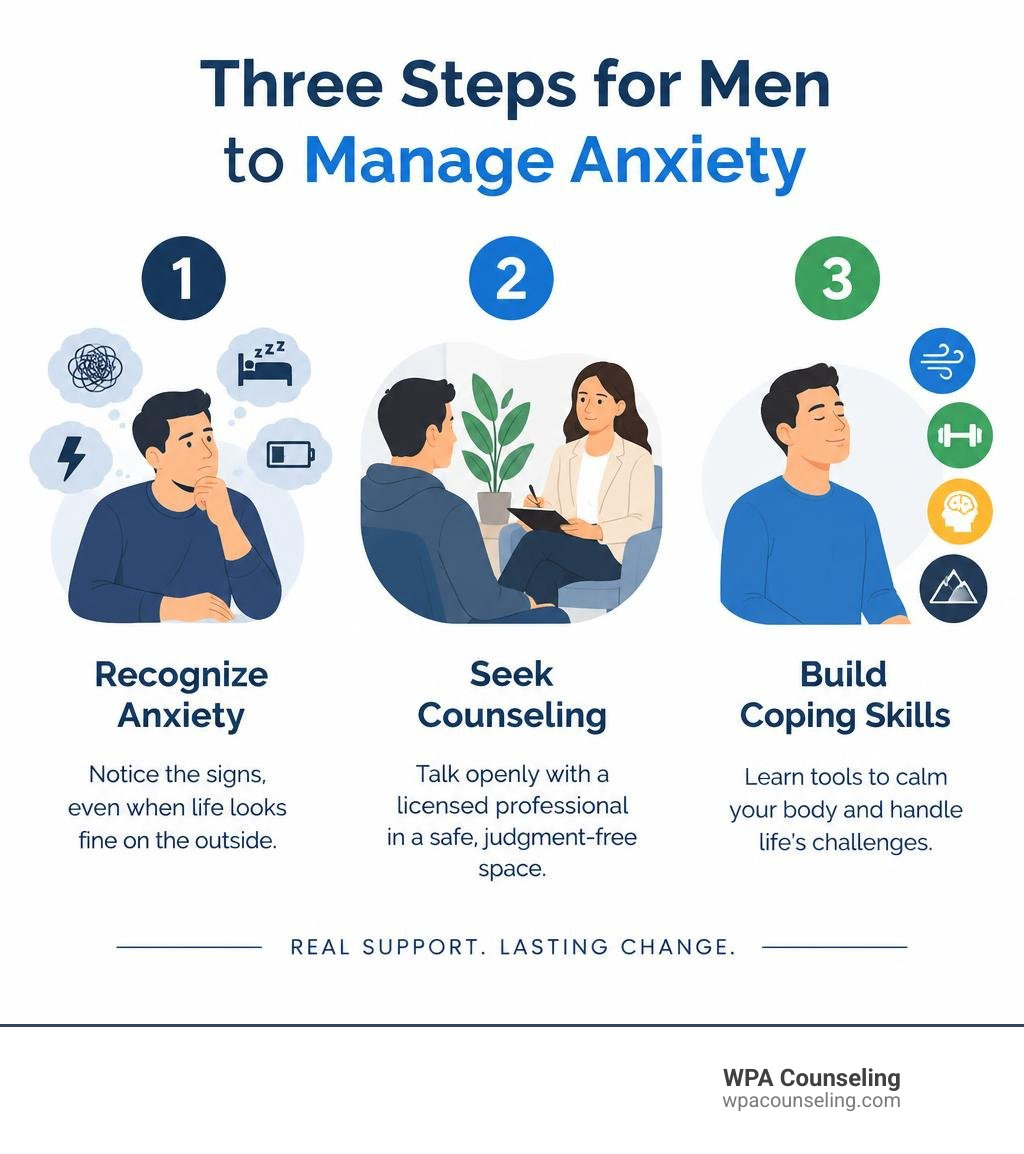
Anxiety therapy for men can help you understand what is driving your stress, build skills to calm your body, and talk through problems without being judged. A good first step is to meet with a licensed counselor, describe what anxiety looks like in daily life, and create a plan that may include coping tools, structured therapy such as CBT, and support for stress, trauma, or relationship strain.
For many men, anxiety does not always look like constant worry. It can show up as irritability, sleep problems, muscle tension, overworking, drinking more, shutting down, or taking risks. These signs are real distress, even when life appears fine from the outside.
Traditional pressure to be tough, independent, and emotionally controlled can make asking for help feel like failure. But support is a practical form of self-care. Research links stronger adherence to rigid masculine norms with lower use of psychotherapy, less disclosure of suicidal thoughts, and greater suicide risk.
At WPA Counseling, we offer individual anxiety counseling in Western Pennsylvania, with in-person appointments in Irwin/North Huntingdon and Penn Hills, plus secure telehealth across Pennsylvania. We provide a private space to work through anxiety at a pace that feels manageable.
Understanding How Masculinity Norms Shape Male Anxiety and Help-Seeking
Traditional masculine socialization often instills a belief that emotional vulnerability equals weakness. From an early age, boys are frequently taught that resilience means silent endurance, self-reliance, and unwavering emotional control. While these traits can foster determination, rigid adherence to Traditional Masculinity Ideologies (TMI) creates profound obstacles when emotional distress arises.

When men experience significant psychological strain, conformity to traditional masculine norms frequently dictates how those symptoms are expressed and handled. Research shows that men with strong TMI are substantially less likely to use psychotherapy than men with low TMI, even when experiencing comparable levels of emotional distress. Furthermore, men holding strong TMI beliefs are more than twice as likely to die by suicide while simultaneously being far less likely to disclose suicidal ideation.
A critical study on Australian men’s help-seeking intentions for anxiety symptoms revealed that conformity to masculine norms fully mediates the relationship between symptom severity and willingness to reach out for professional support. Even when anxiety becomes severe, the internalized expectation to solve problems entirely on one’s own prevents many men from reaching out.
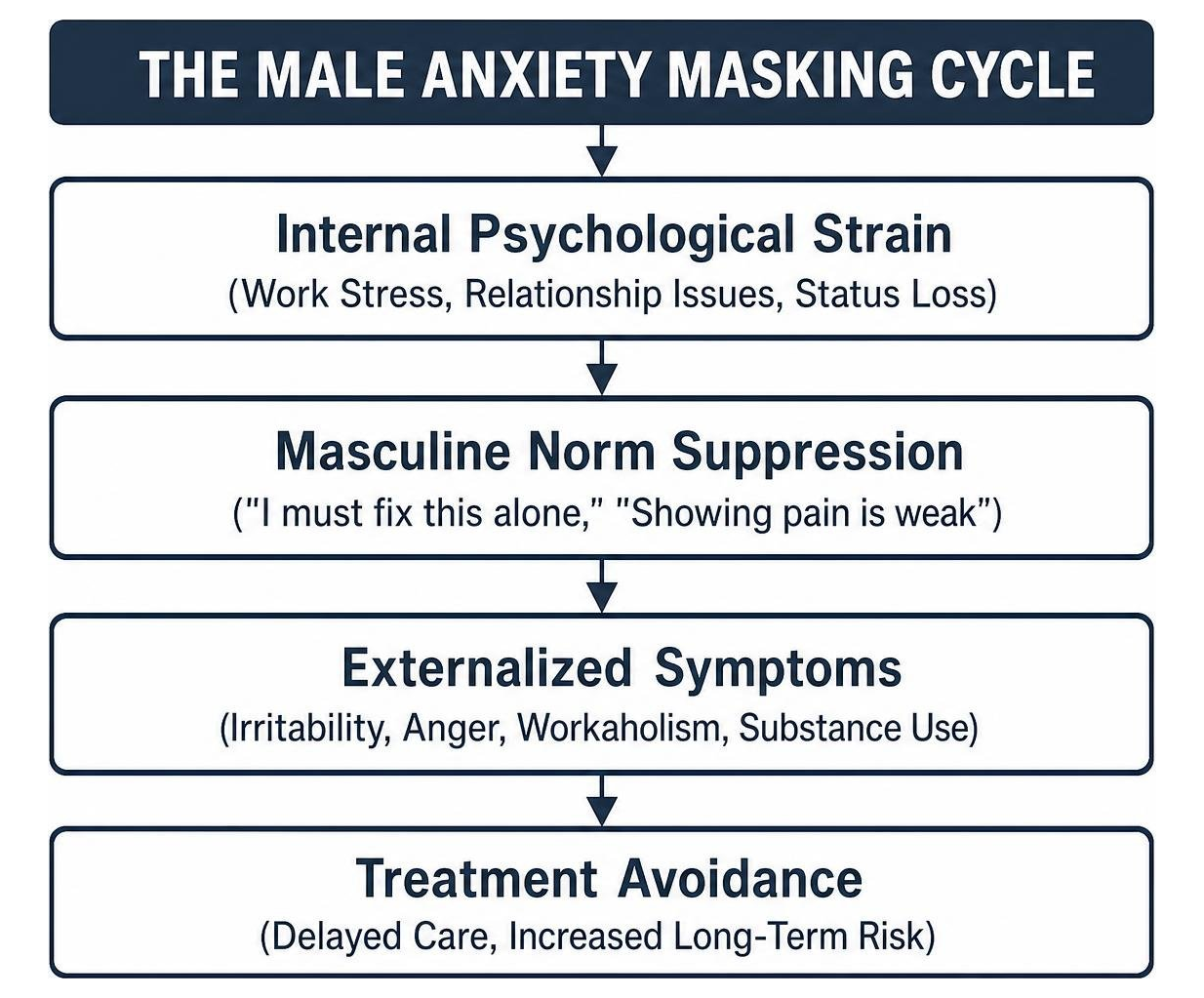
This avoidance is exacerbated during major life transitions or perceived setbacks. Clinical data indicates that men with strong TMI who experience status loss—such as job termination, financial distress, or marital separation—are approximately four times more likely to experience acute mental health crises.
The Difference Between Internalized Distress and Externalized Male Anxiety
A major diagnostic hurdle in men’s mental health is the difference in how anxiety and mood disturbances manifest. Standard diagnostic criteria historically prioritize internalizing symptoms:
- Overt tearfulness
- Expressed feelings of hopelessness
- Clear verbal disclosures of worry or sadness
Men, however, frequently develop an externalizing symptom phenotype. Rather than expressing fear or nervous apprehension directly, anxiety is often channeled into:
- Short-tempered irritability and outbursts of anger
- Compulsive overworking and perfectionism
- Increased risk-taking and reckless driving
- Increased alcohol or substance consumption
- Severe physical complaints, including unexplained chest tightness, gastrointestinal distress, tension headaches, and chronic muscular aches
When diagnostic screening only accounts for stereotypical, internalizing symptoms, the rate of mood and anxiety disorders in men appears roughly half that of women. Yet when externalizing behaviors and somatic complaints are properly evaluated, this diagnostic gender gap disappears. Many men channel their distress into over-functioning, making navigating high-functioning anxiety a crucial focus of modern counseling.
Overcoming Stigma Through Modern Anxiety Therapy for Men
Addressing male anxiety requires breaking through the persistent fear of judgment. For many men, reaching out for support triggers feelings of precarious manhood—the sense that masculine standing is fragile and easily lost through any perceived display of vulnerability.
Modern clinical practice actively reframes mental health care. Therapy is not an admission of defeat; it is a tactical, proactive strategy to regain mastery over one’s physiological responses, mental clarity, and relational health. Seeking out individual counseling for anxiety and depression allows men to deconstruct unhelpful self-reliance pressures and build sustainable coping mechanisms.
The Critical Need for Tailored Anxiety Therapy for Men
The mental health disparities among men highlight a profound public health concern. Working-age men aged 35–64 account for over 38% of all suicides in the United States. Despite common assumptions that men simply avoid medical settings entirely, data demonstrates that 81% of men who died by suicide visited a healthcare provider during the year prior to their death.

These statistics reveal a critical missed opportunity: men are interacting with healthcare systems, but their psychological distress is often overlooked because traditional clinical settings are not calibrated to detect externalized male anxiety.
| Clinical Dimension | Standard Therapeutic Approach | Male-Tailored Mental Health Approach |
|---|---|---|
| Communication Style | Open-ended emotional exploration | Direct, goal-oriented, collaborative problem solving |
| Symptom Screening | Focuses on internalizing symptoms (worry, sadness) | Assesses externalizing symptoms (anger, somatic tension, risk-taking) |
| Language & Framing | Clinical terminology (“vulnerability,” “affect”) | Strength-based concepts (“resilience,” “tactical self-regulation”) |
| Masculine Norms | Treated as neutral background variables | Actively deconstructed to reduce role strain and distress |
| Delivery Mediums | Traditional outpatient clinic settings | Flexible formats, including secure online counseling |
Integrating Anxiety Assessment and Safety Planning for Working-Age Men
To effectively engage working-age men, therapeutic care must incorporate structured, objective evaluation alongside transparent safety protocols. When clinicians normalize the challenges of professional, financial, and family pressures, men feel significantly more comfortable discussing the full extent of their distress.
A critical milestone in evaluating gender-responsive strategies was published in a landmark clinical trial on working-age male mental health interventions, which demonstrated that tailored, strength-based digital platforms effectively engage men at elevated risk who otherwise avoid conventional clinical intake. By utilizing transparent self-assessments and collaborative safety planning, clinicians help men demystify their symptoms and build a practical roadmap for recovery, as detailed in our guide on understanding anxiety counseling options.
Evidence-Based Approaches and Male-Tailored Interventions
Tailoring therapy for men does not mean abandoning established clinical science; it means delivering proven modalities through a framework that respects how men process stress and communicate.
According to comprehensive clinical research on male-tailored psychotherapy (Eggenberger et al., 2023), integrating male-specific psychoeducation directly decreases negative affect and shame while improving therapeutic retention. These interventions help men transition from destructive externalizing behaviors toward recognizing their core emotional needs.
Key therapeutic modalities that resonate strongly with men include:
- Cognitive Behavioral Therapy (CBT): Offers a logical, structured environment to evaluate distorted automatic thoughts, examine unhelpful core beliefs, and implement behavioral adjustments.
- Dialectical Behavior Therapy (DBT) Skills: Provides concrete tools for distress tolerance, emotional regulation, and mindfulness to manage acute physiological arousal.
- Attachment-Based Counseling: Helps men understand how early relational dynamics influence their current communication, trust, and intimacy in romantic and family relationships.
- Trauma-Informed Care: A structured approach to resolving past wounds without forcing premature vulnerability, maintaining safety and emotional pacing throughout the process.
What to Expect During Clinical Anxiety Therapy for Men
Entering therapy should feel collaborative, structured, and focused on clear goals. In our clinical work, sessions focus on providing actionable strategies you can apply immediately in your daily routine:
- Physiological Regulation: Learning to deactivate the body’s fight-or-flight response using structured breathwork and somatic exercises for anxiety relief.
- Cognitive Restructuring: Applying evidence-based CBT for anxiety to identify catastrophizing, black-and-white thinking, and performance pressure.
- Behavioral Problem-Solving: Breaking down overwhelming occupational or personal dilemmas into manageable action steps.
- Relational Strengthening: Developing clear communication techniques to resolve conflict at home and work without withdrawing or reacting aggressively.
Comprehensive Mental Health Care with Licensed Counselors in Pennsylvania
At WPA Counseling, we understand the distinct pressures men face in today’s demanding world. Established as a dedicated group practice of licensed professional counselors based in Western Pennsylvania, our practice history is rooted in providing accessible, evidence-based mental health care across the region. Over years of focused clinical experience, our team of licensed Pennsylvania clinicians has supported working-age men, professionals, and fathers through debilitating anxiety, burnout, relationship strain, and complex life transitions.
Our clinicians bring deep professional backgrounds in modern, practical modalities—including Cognitive Behavioral Therapy (CBT), Dialectical Behavior Therapy (DBT) skills, attachment-based approaches, and trauma-informed counseling. We focus on counseling-based emotional and relational healing, providing structured strategies that resonate with how men process stress without judgment or clinical jargon.
We structure our care around our core Counseling Blueprint, a four-stage healing process designed to provide clarity and tangible progress:
- Take Off the Mask: Establishing genuine trust and rapport in a judgment-free environment where you do not have to pretend everything is fine.
- Heal the Wounds: Carefully identifying and addressing underlying emotional, relational, and trauma-related hurts that drive nervous system dysregulation.
- Remove the Toxins: Uncovering and dismantling unhelpful beliefs, rigid masculinity scripts, and chronic self-criticism.
- Replace with Truth: Installing empowering, accurate perspectives about your worth, capabilities, and relationships, establishing lasting psychological resilience.
Whether you prefer in-person sessions at our comfortable offices in Irwin/North Huntingdon or Penn Hills, or require the flexibility of secure telehealth across Pennsylvania, our clinical team delivers individualized care tailored to your goals. Our comprehensive services encompass individual counseling, anxiety therapy, depression counseling, trauma therapy, couples and family counseling, grief support, stress management, and faith-sensitive counseling. Learn more about our commitment to breaking barriers in our guide on men’s mental health support in Pennsylvania and explore our flexible online anxiety therapy options.
Frequently Asked Questions About Men’s Anxiety and Counseling
How does anxiety typically present differently in men compared to women?
While women more frequently report verbal worry, panic, or classic depressive symptoms, men often manifest anxiety through physical and behavioral avenues. These include chronic muscular stiffness, digestive issues, sudden bouts of irritability, emotional withdrawal, hyper-focus on work, or increased alcohol consumption. For an in-depth breakdown of these dynamics, read our comprehensive guide to therapy for anxiety.
Why are working-age men less likely to seek professional anxiety support?
Working-age men are often constrained by traditional gender socialization emphasizing extreme self-reliance, stoicism, and fear of appearing vulnerable. Concerns over career stability, perceived loss of status, and the mistaken belief that emotional distress represents personal failure frequently lead men to delay treatment until symptoms significantly disrupt their lives.
How effective are specialized, male-tailored counseling approaches?
Clinical studies confirm that male-tailored interventions significantly boost engagement, lower dropout rates, and accelerate symptom reduction. By utilizing collaborative, goal-driven frameworks, addressing gender role conflict directly, and employing strength-based communication, men achieve meaningful, sustainable improvements in mental health and relationship satisfaction.
Conclusion
Anxiety is not a character flaw, nor is it a sign that you have failed as a provider, partner, or individual. It is a biological and psychological signal that your nervous system is carrying an unsustainable load. Continuing to push through chronic stress in isolation only deepens exhaustion and increases long-term risk.
Taking proactive control of your mental health is an investment in your future, your family, and your peace of mind. Working with a counselor who understands the unique nuances of men’s mental health provides you with the practical tools needed to regain focus, master your stress response, and build genuine resilience.
If you are ready to take the next step, we invite you to connect with our team. Reach out today to get thoughtfully matched with a licensed Pennsylvania therapist through our specialized anxiety counseling in Pittsburgh and start your path toward lasting relief.
This article was researched with AI and heavily edited by Stephen Luther for accuracy and relevance.
Stephen Luther is the Executive Director and Founder of WPA Counseling. He holds a Master’s degree in Education from the University of Georgia and a Master’s degree in Marriage and Family Therapy from Duquesne University. He is a licensed professional counselor in Pennsylvania (LPC).
Since 1997, Steve has been helping children, adolescents, adults, couples, and families overcome emotional and relational challenges. He specializes in working with hurting families, including those with foster, adopted, or traumatized children. Steve uses Attachment-Based Therapy, client-centered therapy, and Therapeutic Parent Coaching to support healing and relationship restoration.
This guide is for educational and spiritual encouragement and is not a substitute for personalized professional counseling. If you are in crisis, please reach out for immediate help.
References
Eggenberger L, Ehlert U, Walther A. “New directions in male-tailored psychotherapy for depression..” Frontiers in psychology, 2023. PMCID PMC10151934.