

What Is Trauma Bonding and How Does It Manifest in Relationships?
If you are searching for a licensed therapist for trauma bonding in the North Huntingdon, PA or Irwin area, WPA Counseling offers specialized, trauma-informed care through experienced Licensed Professional Counselors (LPCs) at our local Irwin/North Huntingdon office and via secure statewide telehealth. Our clinical team helps individuals recognize manipulative cycles, process betrayal trauma, and safely break free from destructive relationship bonds.
Trauma bonding is an intense psychological attachment that develops between an abused or mistreated individual and their abuser. Unlike healthy relationships built on mutual respect, consistency, and safety, a trauma bond thrives on a cyclical pattern of mistreatment followed by affection, validation, or remorse.
Approximately one in six adults in the United States experiences at least one significant traumatic event in their lifetime. When relational trauma occurs, research indicates that up to 70% of individuals in emotionally abusive relationships develop strong trauma bonds. This biochemical and psychological tether makes separating from a harmful partner deeply distressing and difficult to navigate without specialized clinical guidance.
The Neurobiology of the Bond
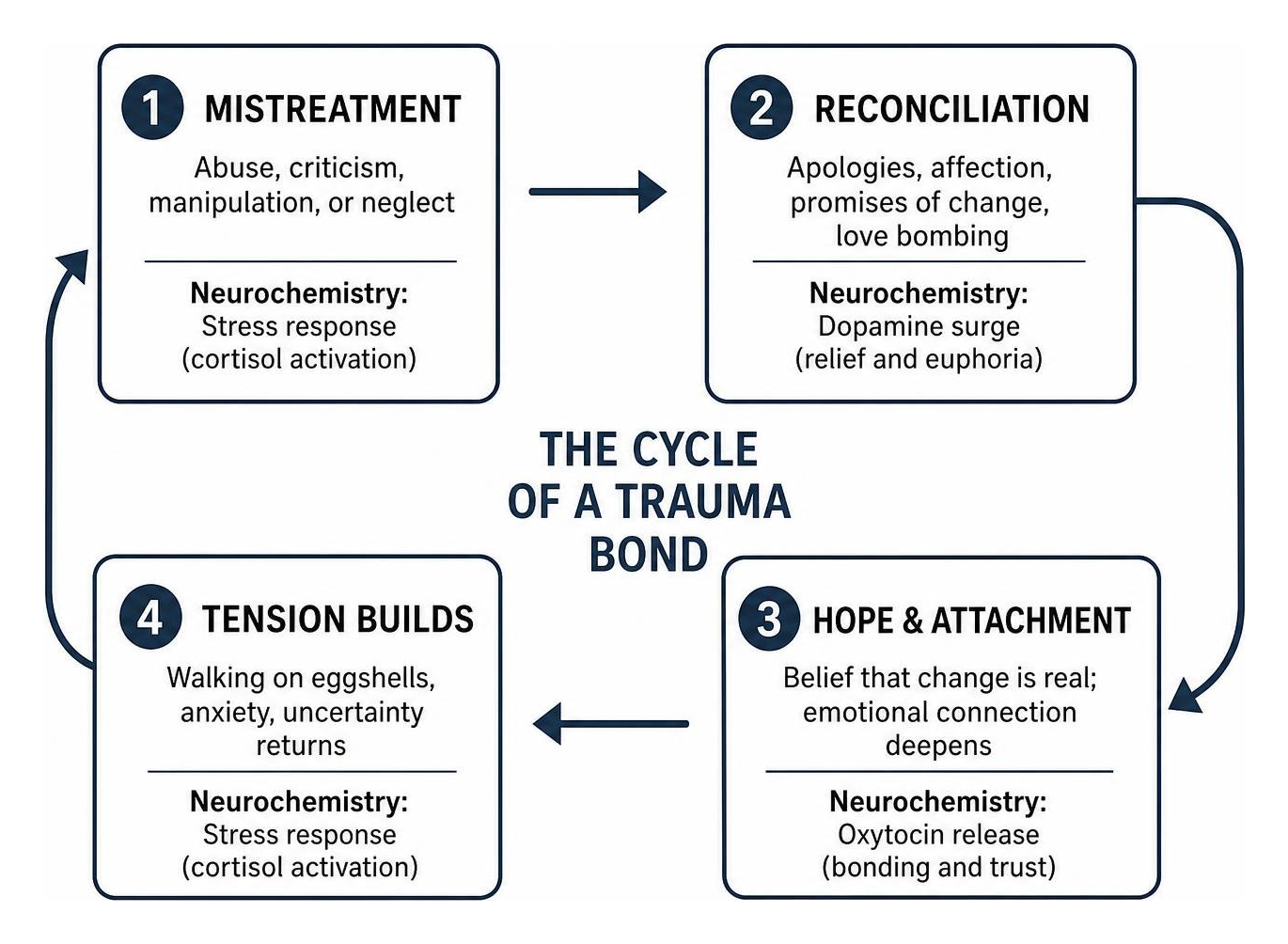
At a neurobiological level, trauma bonding mirrors the mechanics of addiction. When an abusive partner alternates between hostility and warmth, it activates an intermittent reinforcement schedule—the single most potent behavioral conditioning mechanism known to psychology.
- Dopamine Surges: During reconciliations, promises of change, or loving gestures (often referred to as “love bombing”), your brain releases massive surges of dopamine. You experience profound relief and euphoria.
- Cortisol and Adrenaline Spikes: When tension builds and criticism, manipulation, or emotional abuse resumes, your nervous system is flooded with stress hormones. You enter a fight, flight, or freeze state.
- The Search for Relief: Because the person causing your distress is also the person who provides emotional soothing during the “calm” phase, your brain becomes conditioned to seek comfort from the very source of your injury.
This chemical loop fosters severe cognitive dissonance. You may find yourself making excuses for harmful behavior, minimizing blatant mistreatment, or feeling unable to walk away despite knowing the relationship is destructive. To explore these dynamics more deeply, read about the sticky truth about trauma bonding and how it keeps people emotionally tethered.
Trauma Bond vs. Healthy Secure Attachment
Understanding whether your relationship is based on genuine attachment or a traumatic bond is essential for your emotional clarity. We have outlined the key behavioral markers below:
| Feature | Trauma Bond | Healthy Secure Attachment |
|---|---|---|
| Relational Pattern | Unpredictable cycles of highs, lows, abuse, and intense apologies. | Consistent, stable, respectful, and emotionally predictable. |
| Communication | Walking on eggshells, defensiveness, blame-shifting, and gaslighting. | Open, honest, non-defensive dialogue with mutual accountability. |
| Power Dynamics | Unequal, controlling, manipulative, and dependent on one person’s moods. | Balanced, cooperative, egalitarian, and mutually supportive. |
| Sense of Identity | Erosion of self-esteem, isolation from loved ones, loss of personal values. | Encouragement of personal autonomy, outside friendships, and self-growth. |
| Conflict Resolution | Volatile blowups followed by superficial reunions without real change. | Calm discussions aimed at repair, compromise, and mutual understanding. |
| Internal Feeling | Constant anxiety, panic, exhaustion, and obsession with pleasing the partner. | Safety, peace, emotional security, and confidence in the partnership. |
Recognizing these distinctions is a powerful first step. For a deeper breakdown of these dynamics, explore our guide on trauma bonding vs healthy attachment how to tell the difference and learn more about navigating relationship trauma and emotional abuse.
What Credentials and Qualifications Should You Look for in a Pennsylvania Therapist?
Recovering from a trauma bond requires specialized clinical expertise. In Pennsylvania, there are over 1,200 licensed mental health professionals across Westmoreland County and the greater Pittsburgh area who focus on trauma and relationship dynamics. However, not every general counselor has specific training in complex betrayal bonds, narcissistic manipulation, or post-separation recovery.
Essential Credentials to Look For
When evaluating providers in Irwin, North Huntingdon, or Western Pennsylvania, look for licensed clinicians with recognized state credentials:
- Licensed Professional Counselor (LPC): Clinicians who hold master’s or doctoral degrees in professional counseling and have completed thousands of hours of supervised clinical experience in individual, relational, and trauma therapies.
- Licensed Clinical Social Worker (LCSW): Mental health professionals trained to assess individuals within their broader family and relational systems, utilizing trauma-informed interventions.
- Licensed Marriage and Family Therapist (LMFT): Specialists focused on relational dynamics, systemic patterns, and relational recovery.
Advanced Specializations and Competencies
Beyond standard licensing, ensure your counselor possesses focused training in trauma recovery:
- Trauma-Informed Care & Attachment Theory: An understanding of how early attachment wounds leave individuals vulnerable to manipulative relationship dynamics.
- Complex PTSD (C-PTSD) Training: Expertise in treating long-term, repeated psychological stress rather than just single-incident trauma.
- Relational and Emotional Abuse Dynamics: Familiarity with coercive control, gaslighting, intermittent reinforcement, and covert emotional abuse.
Verifying a Counselor’s License in Pennsylvania
In Pennsylvania, you can independently verify any mental health practitioner’s license status and disciplinary history through the Pennsylvania Licensing System (PALS) website maintained by the PA Department of State. Simply search the practitioner’s full legal name and license type to confirm that their license is active, in good standing, and free of public disciplinary actions.
For detailed steps on selecting the right clinician for your needs, consult our resource on how to find the right therapist for trauma in pennsylvania and review the comprehensive pittsburgh therapy guide finding your perfect professional counselor.
Which Evidence-Based Therapies Are Most Effective for Breaking Trauma Bonds?
Overcoming a trauma bond requires structured clinical interventions that address both the cognitive stories you tell yourself and the somatic stress trapped in your nervous system. According to findings from the American Psychological Association, up to 80% of individuals who engage in targeted, trauma-focused therapy experience significant symptom reduction and relational clarity within 12 to 20 sessions.
Here are the primary evidence-based counseling modalities proven to help break trauma bonds:
1. Eye Movement Desensitization and Reprocessing (EMDR)
EMDR is a specialized psychotherapy designed to help the brain reprocess traumatic memories, emotional triggers, and relational flashpoints. By utilizing bilateral stimulation (such as side-to-side eye movements or gentle tapping), EMDR desensitizes the intense emotional charge connected to moments of abuse, betrayal, or manipulation. This allows you to view past relationship events objectively without experiencing immediate panic, guilt, or the urge to reach out to an abusive partner.
2. Cognitive Behavioral Therapy (CBT)
CBT helps you identify, challenge, and replace core cognitive distortions created by prolonged emotional manipulation. When you have experienced gaslighting, your internal dialogue often includes beliefs such as “Everything was my fault,” “I cannot survive on my own,” or “If I just tried harder, they would change.” CBT teaches you to systematically dismantle these false premises and establish objective self-evaluations.
3. Dialectical Behavior Therapy (DBT)
DBT provides practical skills for distress tolerance, emotional regulation, and interpersonal effectiveness. When severing a trauma bond, individuals often experience profound emotional withdrawal akin to substance detox. DBT equips you with concrete grounding techniques to navigate intense cravings for contact, manage acute anxiety spikes, and set unshakeable boundaries.
4. Attachment-Based and Trauma-Informed Counseling
Attachment-based therapy explores how your developmental history and early childhood relationships may have shaped your tolerance for inconsistent love. By healing these foundational wounds, you learn to establish secure self-attachment, spot relational red flags early, and develop healthier relationship standards.
To learn more about the mechanics of structured recovery, read our overview on trauma bonding therapy 101, explore trauma systems therapy healing from betrayal bonds in pennsylvania, or review a practical guide to effective trauma therapy in pennsylvania.
How Does WPA Counseling Support Trauma Recovery in Irwin and North Huntingdon?

At WPA Counseling, we are a dedicated group practice of licensed professional counselors committed to helping individuals, couples, and families heal from emotional distress, relational trauma, and complex life transitions. With established clinical offices in Irwin/North Huntingdon and Penn Hills, Pennsylvania, our local practice history is rooted in years of providing compassionate, accessible mental health support throughout Western PA communities, alongside secure telehealth services available to clients across the entire state of Pennsylvania.
Our team of licensed PA counselors brings extensive clinical experience and specialized professional background in trauma-informed care, attachment repair, and relationship dynamics. We utilize proven, evidence-based methods to guide clients through emotional healing, offering a comprehensive suite of counseling services tailored to your unique circumstances:
- Individual Counseling
- Trauma Therapy & Betrayal Recovery
- Anxiety Therapy & Stress Management
- Depression Counseling
- Couples Counseling & Family Therapy
- Grief & Loss Support
- Faith-Sensitive Counseling (integrating personal values and faith perspectives upon request)
Whether you are seeking in-person care serving irwin pa and our locations north huntingdon pa, or looking for regional care through trauma therapy pittsburgh, our clinical team is equipped to meet you right where you are. We also help clients address overlapping relational habits through unraveling the knot with codependency counseling in irwin pa.
The Four-Stage Healing Process at WPA Counseling
Trauma recovery is not an overnight event; it is an intentional, guided journey. At WPA Counseling, our clinical work often follows our structured Counseling Blueprint, designed to move you from confusion to lasting freedom:

- Stage 1: Take Off the Mask (Rapport & Emotional Safety)
Healing cannot occur without deep psychological safety. In our initial sessions, we create a secure, non-judgmental environment where you can speak honestly about your relationship without fear of criticism. We build trust, validate your lived experiences, and establish immediate stability. - Stage 2: Heal the Wounds (Deep Wound Exploration)
We gently explore the core relational injuries, betrayal events, and attachment vulnerabilities that allowed the trauma bond to take root. By processing these past wounds with evidence-based methods, we reduce the emotional reactivity and shame associated with the relationship. - Stage 3: Remove the Toxins (Severing Toxic Cycles & Boundary Setting)
In this stage, we actively dismantle the cycles of manipulation, intermittent reinforcement, and cognitive dissonance. We help you implement strong, practical boundaries, navigate the grief of separation, and halt self-sabotaging communication patterns. - Stage 4: Replace with Truth (Truth Restoration & Future Growth)
Finally, we help you replace the distorted beliefs planted by emotional abuse with grounded truths about your identity, worth, and capabilities. You will build emotional autonomy, cultivate self-trust, and develop clear criteria for healthy, reciprocal future relationships.
How Should You Prepare for Your Consultation, Manage Costs, and Verify Insurance?
Taking the step to reach out for professional counseling can feel overwhelming, but being informed about logistics, costs, and expectations will help you feel empowered.
Local Costs and Financial Considerations
In the North Huntingdon and Irwin area, private counseling sessions for specialized trauma therapy typically range from $100 to $200 per session.
- Insurance & Superbills: While many specialized trauma clinicians operate as out-of-network providers to ensure complete privacy, customized care plans, and unhurried treatment timelines, most can provide itemized billing statements (called “superbills”). You can submit these directly to your health insurance provider for out-of-network reimbursement.
- Sliding Scale Options: Many practices offer sliding scale fee structures based on household income to make care accessible.
- Health Savings Accounts (HSA/FSA): You can use pre-tax funds from Health Savings Accounts or Flexible Spending Accounts to cover therapy sessions and copays.
Preparing for Your Initial Consultation
Your initial 15-minute consultation is your opportunity to determine whether a counselor is the right match for your unique situation. Review our practical steps on healing from trauma proven steps for emotional recovery before your first call.
Here is a checklist of essential questions to ask during your consultation:
- What specific experience do you have in treating trauma bonding, emotional abuse, or betrayal trauma?
- Which evidence-based modalities (e.g., EMDR, CBT, DBT, attachment-based therapy) do you use in your sessions?
- Do you offer in-person sessions at your Irwin/North Huntingdon office, virtual telehealth sessions, or a hybrid model?
- What is your typical clinical framework for helping clients safely establish boundaries or sever contact?
- How do we track progress throughout our 12 to 20 sessions together?
If you are ready to explore your options with our compassionate team, you can directly schedule call with an intake coordinator or reach out through our online contact form.
Frequently Asked Questions About Trauma Bonding Therapy in Irwin, PA
How long does it take to heal from a trauma bond in therapy?
Recovery timelines vary based on individual circumstances, such as the duration of the relationship, the severity of emotional manipulation, and how consistently you attend therapy. However, clinical studies show that most clients experience marked clarity, emotional regulation, and relief within 12 to 20 structured sessions. Healing involves distinct milestones: gaining awareness of the cycle, establishing physical and emotional boundaries, processing grief, and rebuilding your independent life.
Is virtual therapy as effective as in-person counseling for trauma bonding?
Yes. Secure telehealth across Pennsylvania has been clinically proven to be just as effective as in-person counseling for trauma recovery. For many individuals in Westmoreland County dealing with high-conflict relationship dynamics, virtual sessions provide an added layer of physical safety, discretion, and scheduling flexibility. At WPA Counseling, we offer both in-person sessions at our Irwin/North Huntingdon and Penn Hills offices and secure statewide virtual counseling.
What is the primary difference between codependency and a trauma bond?
While both conditions involve unhealthy relationship patterns, their root causes and neurochemical signatures differ:
- Codependency is typically centered around an excessive emotional or psychological reliance on a partner, often characterized by caretaking, enabling, and deriving self-worth from meeting the other person’s needs.
- A Trauma Bond is forged specifically through fear, power imbalances, and intermittent cycles of abuse and reward. The intense attachment in a trauma bond is driven by biological stress responses and neurochemical cravings rather than caretaking tendencies alone. Therapy is tailored accordingly to address these unique biological and psychological drivers.
How Can You Take the First Step Toward Reclaiming Your Life?
Living inside the cycle of a trauma bond can leave you feeling drained, confused, and disconnected from the person you used to be. But you do not have to untangle this alone. With the right licensed professional guiding you through evidence-based care, you can break the cycle of intermittent reinforcement, quiet the internal anxiety, and step into genuine emotional peace.
At WPA Counseling, our team of licensed Pennsylvania counselors is here to walk alongside you at every stage of your healing journey. We will match you with a compassionate therapist who understands relational trauma and can provide the tailored tools you need to reclaim your confidence and independence.
Take the first step toward lasting freedom today by exploring our specialized pennsylvania trauma counseling services. You deserve a life defined by peace, safety, and mutual respect.
This article was researched with AI and heavily edited by Stephen Luther for accuracy and relevance.
Stephen Luther is the Executive Director and Founder of WPA Counseling. He holds a Master’s degree in Education from the University of Georgia and a Master’s degree in Marriage and Family Therapy from Duquesne University. He is a licensed professional counselor in Pennsylvania (LPC).
Since 1997, Steve has been helping children, adolescents, adults, couples, and families overcome emotional and relational challenges. He specializes in working with hurting families, including those with foster, adopted, or traumatized children. Steve uses Attachment-Based Therapy, client-centered therapy, and Therapeutic Parent Coaching to support healing and relationship restoration.
This guide is for educational and spiritual encouragement and is not a substitute for personalized professional counseling. If you are in crisis, please reach out for immediate help.