

Trauma bonding is a complex psychological and emotional attachment that forms in abusive or toxic relationships. It develops through repeated cycles of intense emotional experiences involving pain, manipulation, and intermittent positive reinforcement. This dynamic creates a powerful, often subconscious, bond that can be incredibly difficult to break, even when the relationship is clearly harmful.
Research indicates that trauma bonds follow a distinct pattern, often described in seven stages: love bombing, trust and dependency, criticism, manipulation/gaslighting, resignation, loss of self, and an addiction to this very cycle. The abuser might shower the victim with affection (love bombing), then withdraw, criticize, or gaslight them, only to return with intermittent kindness. This “intermittent reinforcement” is one of the most powerful behavioral conditioning patterns known to neuroscience, making the victim cling to the hope of the “good times” returning.
Key Signs of Trauma Bonding:
Narcissism expert Ramani Durvasula identifies six key signs of trauma bonding:
- Devaluation: Feeling consistently put down or made to feel worthless.
- Gaslighting: Having your reality questioned and undermined, leading you to doubt your own perceptions.
- Domination: Experiencing excessive control over your life, decisions, or relationships.
- Disagreeableness: Constant conflict, arguments, or a pervasive sense of tension.
- Betrayal: Repeated acts of disloyalty or breaking trust.
- Deprivation: Being denied emotional support, affection, or basic needs.
Additionally, other common indicators include:
- Making excuses for the harmful behavior of your partner.
- Feeling unable to leave the relationship despite knowing it’s unhealthy.
- Covering up abuse or minimizing its severity.
- Cycling between intense love and fear or anxiety.
- Experiencing separation anxiety when away from the abuser.
- A significant loss of your own identity, interests, or friends.
- Maintaining loyalty to the abuser despite repeated betrayals.
- Becoming isolated from your support network.
- “Walking on eggshells” to avoid upsetting your partner.
- Clinging to small moments of kindness as proof of love.
The nervous system plays a crucial role in trauma bonding. A concept called “Neuroception” describes how our nervous system subconsciously scans for safety or danger, often before our conscious mind processes it. In a trauma-bonded relationship, the nervous system becomes miscalibrated, equating intense emotional highs and lows with a sense of connection, even if it’s rooted in danger. Childhood maltreatment and attachment insecurity significantly increase the risk of developing these bonds in abusive relationships.
How Trauma Bonding Differs from Healthy Attachment:
Healthy attachment, in contrast, is built on a foundation of safety, mutual respect, consistency, reliability, and support for personal growth. It fosters a secure sense of self and allows for genuine intimacy without fear or manipulation.
Here’s a comparison of the key differences:
| Feature | Trauma Bonding | Healthy Attachment |
|---|---|---|
| Key Characteristics | Cycles of abuse and intermittent positive reinforcement; power imbalance; manipulation. | Consistent safety, trust, and reliability; mutual respect; genuine care. |
| Emotional Experience | Intense highs and devastating lows; emotional rollercoaster; anxiety, fear, confusion. | Steady, predictable, and secure; feelings of calm, comfort, and joy. |
| Impact on Self | Loss of identity; self-doubt; walking on eggshells; constant survival mode. | Secure identity; self-worth; personal growth and evolution; feeling empowered. |
| Relationship Dynamics | Addiction to the cycle; difficulty leaving; loyalty despite harm; isolation. | Freedom to leave; mutual support; open communication; healthy boundaries. |
| Neurochemical Basis | Driven by stress hormones (cortisol) and intermittent dopamine/oxytocin spikes, creating a biological addiction. | Driven by consistent oxytocin and serotonin, fostering genuine connection and well-being. |
Understanding these distinctions is the first critical step toward healing. For more in-depth information, you can read our articles on Trauma Bonding Vs Healthy Attachment How To Tell The Difference and The Sticky Truth About Trauma Bonding.
Why is a Therapist’s Understanding of These Differences So Crucial?
A therapist who deeply understands the differences between trauma bonding and healthy attachment is indispensable for several reasons:
- Accurate Diagnosis and Differentiation: These relationships can be incredibly confusing, often masquerading as “intense love” or “passion.” A skilled therapist can accurately diagnose trauma bonding, distinguishing it from other relationship issues like codependency or simply a challenging but healthy relationship. This prevents misdiagnosis and ensures appropriate treatment.
- Validation and Reduced Shame: Many individuals caught in trauma bonds experience profound shame, believing they are “addicted” to a toxic person due to a personal flaw. A therapist who understands the neurobiology of trauma bonding can explain that it’s a biological addiction, not a character flaw. This validation is incredibly powerful, reducing shame and empowering the client to engage in healing.
- Targeted Therapeutic Interventions: General talk therapy may not be sufficient for the complex dynamics of trauma bonding. A specialized therapist employs interventions that address the neurobiology of trauma, attachment wounds, and the specific patterns of abuse. They help clients process the “euphoric recall”—the tendency to obsess over the “good times”—by grounding them in the reality of the abuse.
- Breaking the Cycle: Understanding attachment styles, especially how insecure attachment formed in childhood maltreatment, increases vulnerability to trauma bonds. A therapist helps clients recognize these patterns and develop healthier attachment strategies.
- Corrective Experience: The therapeutic relationship itself can become a “corrective experience.” Within a safe, consistent, and respectful space, clients can learn what healthy attachment feels like, helping to rewire their nervous system and challenge their ingrained patterns. This relational experience with a therapist can be crucial for healing deep attachment wounds.
Our therapists at WPA Counseling recognize that healing from relational trauma requires a nuanced approach. We stay informed by the latest research on attachment trauma and its impact on relationships, ensuring our clients receive the most effective care. You can learn more about the complexities of these dynamics in our article on Relationship Trauma And Emotional Abuse.
How Can You Find a Therapist Specializing in Trauma Bonding and Attachment Issues?
Finding the right therapist is a proactive step toward healing. Here’s a guide to help you in your search, especially within Pennsylvania:
Self-Assessment Questions: Before you begin your search, consider these questions to clarify your needs:
- Do I find myself repeatedly drawn to intense, volatile relationships?
- Do I make excuses for a partner’s harmful behavior?
- Do I feel unable to leave a relationship despite knowing it’s unhealthy?
- Do I often feel confused, anxious, or “on edge” in my relationship?
- Do I feel like I’ve lost myself or my identity within a relationship?
- Do I cling to small moments of kindness, overlooking consistent mistreatment?
- Do healthy, stable relationships feel “boring” or less exciting?
If these resonate, a trauma bonding therapist can offer specialized support.
Key Qualifications and Experience to Look For: When evaluating potential therapists, prioritize those with:
- Specialization in Trauma: Look for therapists who specifically list trauma, complex PTSD (C-PTSD), and relational trauma as areas of expertise.
- Attachment Focus: They should have a strong understanding of attachment theory and how early attachment experiences influence adult relationships.
- Experience with Abusive Dynamics: This includes narcissistic abuse, emotional abuse, and codependency.
- Understanding of Neurobiology: A therapist who understands how trauma impacts the brain and nervous system is crucial for effective treatment.
- Certifications in Relevant Modalities: Look for certifications in evidence-based approaches like Eye Movement Desensitization and Reprocessing (EMDR), Internal Family Systems (IFS), Somatic Experiencing (SE), or Emotionally Focused Therapy (EFT).
Where to Look for Therapists in Pennsylvania:
- Online Directories: Websites like Psychology Today and Grow Therapy allow you to filter therapists by specialization (e.g., “attachment-based,” “trauma,” “complex PTSD”) and location (e.g., Pennsylvania, Pittsburgh, Penn Hills). These platforms often include detailed profiles of therapists, outlining their approaches and qualifications. For instance, you can find Attachment-based Therapists in Pennsylvania or Attachment-Based Therapy Therapists in Pennsylvania.
- Referrals: Ask trusted doctors, friends, or other mental health professionals for recommendations.
- Online or Teletherapy Options: For those in Western Pennsylvania, Pittsburgh, or across the state, teletherapy offers flexible and convenient access to specialists who may not be geographically close. This broadens your options significantly.
Preparing for Your First Session and Verifying Expertise: Your initial consultation is an opportunity to interview the therapist. Don’t hesitate to ask direct questions.
5 Essential Questions to Ask a Potential Trauma Bonding Therapist:
- “How do you understand the differences between trauma bonding and healthy attachment?”
- “What therapeutic approaches do you specifically use for healing trauma bonds and attachment wounds?”
- “Can you describe your experience working with clients who have been in emotionally abusive or narcissistic relationships?”
- “How do you help clients distinguish between genuine connection and the intensity of a trauma bond?”
- “What is your approach to helping clients rebuild self-worth and establish healthy boundaries after a trauma bond?”
You can verify a therapist’s expertise by checking their professional licenses (available through state licensing boards), reviewing their website for specific training, and noting any endorsements from colleagues on their professional profiles. Our article How To Find The Right Therapist For Trauma In Pennsylvania offers further guidance.
What Therapeutic Approaches Are Most Effective for Healing Trauma Bonding?
Healing from trauma bonding requires a comprehensive, trauma-informed approach that addresses both the psychological and physiological impacts of the experience. The goal is not just to understand the bond, but to rewire the brain’s response and foster healthy attachment.
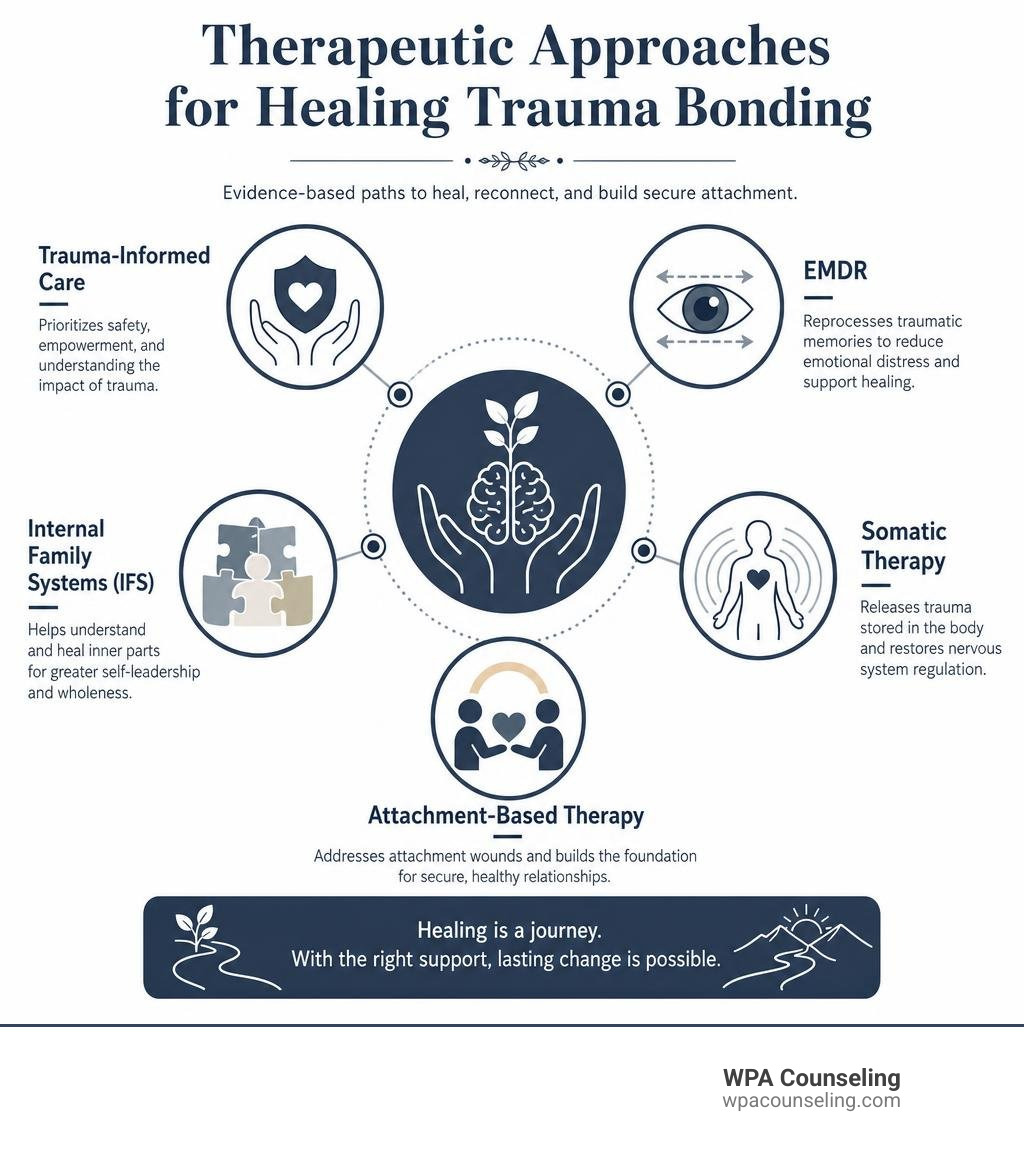
Here are some of the most effective therapeutic approaches:
- Trauma-Informed Care: This is a foundational approach, ensuring that all aspects of therapy recognize the pervasive impact of trauma and prioritize physical, psychological, and emotional safety. It avoids re-traumatization and empowers the client.
- Eye Movement Desensitization and Reprocessing (EMDR): EMDR is highly effective for reprocessing traumatic memories that contribute to the bond. It helps to reduce the emotional charge associated with past distressing experiences, allowing the brain to reprocess them in a healthier way.
- Internal Family Systems (IFS): IFS therapy views the mind as being composed of various “parts” (e.g., an “Exile” part holding pain, a “Caretaker” part trying to manage it). This approach helps clients understand and heal these parts, particularly those that may have formed protective roles in response to attachment wounds, leading to a more integrated and secure sense of self.
- Somatic Experiencing (SE): Trauma, especially relational trauma, often gets “stuck” in the body. Somatic Experiencing focuses on releasing this “frozen survival energy” and regulating the nervous system. By gently guiding clients to notice bodily sensations, SE helps to discharge pent-up energy and restore the body’s natural self-regulation.
- Attachment-Based Therapy: This therapy directly addresses early attachment wounds and helps clients develop a more secure internal attachment style. It explores how past relational experiences influence current patterns, guiding clients toward forming healthier connections and expectations in relationships.
- Cognitive Behavioral Therapy (CBT) and Dialectical Behavior Therapy (DBT): While not standalone treatments for trauma bonding, CBT and DBT can be valuable tools. CBT helps clients identify and challenge distorted thought patterns (e.g., making excuses for an abuser), while DBT provides skills for managing intense emotions, improving interpersonal effectiveness, and tolerating distress during the difficult withdrawal phase.
- Psychoeducation: Understanding the neurobiology of trauma bonds, the tactics of gaslighting, and the impact of intermittent reinforcement is empowering. A good therapist will educate clients, helping them “name it to tame it” and reduce self-blame.
Couples Therapy vs. Individual Therapy: For individuals experiencing trauma bonding, individual therapy is almost always recommended first. It provides a safe space to process trauma, rebuild self-worth, establish boundaries, and heal attachment wounds without the presence or influence of the abuser. Couples therapy may only be considered much later, and only if the abusive partner is genuinely committed to change and the survivor has established strong personal boundaries and a secure sense of self. In many cases of trauma bonding, couples therapy can be counterproductive or even dangerous.
Typical Healing Timeline: Healing from trauma bonding is a process, not an event. While the initial withdrawal period can be difficult, often described as a 90-day withdrawal phase from the neurochemical addiction, overall healing takes time. It involves consistent therapeutic work to process trauma, rebuild self-esteem, and learn new relational patterns.
At WPA Counseling, we offer specialized Trauma Therapy Pittsburgh and support for Trauma Recovery across Pennsylvania, utilizing these effective modalities.
What Red Flags Should You Watch for When Choosing a Trauma Bonding Therapist?
While many therapists are compassionate and skilled, it’s crucial to be discerning when seeking help for trauma bonding. Your healing journey depends on finding a professional who is truly equipped to support you. Here are some red flags to watch for:
7 Red Flags to Avoid When Selecting a Trauma Bonding Therapist:
- Minimizing or Blaming the Client: A therapist who suggests you’re “overreacting,” that “it takes two to tango,” or implies that you are responsible for the abuser’s actions is not trauma-informed. Your experience should be validated, not dismissed.
- Lack of Specific Trauma or Attachment Specialization: If a therapist primarily offers general talk therapy without specific training or experience in trauma, C-PTSD, or attachment theory, they may not have the specialized tools needed to address the complex dynamics of trauma bonding.
- Pushing for Couples Therapy Too Soon: If there’s any indication of abuse (emotional, psychological, physical), a therapist who immediately suggests couples therapy without first ensuring the safety and individual healing of the survivor is a major red flag. Couples therapy can be dangerous in abusive dynamics.
- Focusing Solely on “Fixing” the Client: While self-improvement is part of healing, a therapist who places all the emphasis on what you need to change, without acknowledging the external abusive dynamics, can inadvertently perpetuate self-blame. The focus should be on empowerment and healing, not “fixing” perceived flaws.
- Lack of Understanding of Intermittent Reinforcement: If a therapist doesn’t seem to grasp the addictive nature of trauma bonds or how intermittent kindness can keep someone trapped, they may struggle to provide effective strategies for breaking free.
- Promising Quick Fixes or Unrealistic Timelines: Healing from trauma bonding is a marathon, not a sprint. Be wary of any therapist who guarantees rapid results or downplays the intensity and duration of the healing process.
- Any Unprofessional Conduct, Ethical Breaches, or Lack of Boundaries: This is a universal red flag for any therapeutic relationship. Trust your gut if something feels off—whether it’s inappropriate self-disclosure, blurring of professional lines, or any behavior that makes you uncomfortable.
It’s vital to choose a therapist who understands the nuanced and often subtle ways that emotional abuse and trauma bonding manifest. Our article, Signs You Are Dating Someone With Relationship Trauma And How To Help, can provide additional context on identifying unhealthy relationship patterns.
How Does WPA Counseling Support Healing from Trauma Bonding in Pennsylvania?
At WPA Counseling, we understand the profound impact that trauma bonding can have on an individual’s life, sense of self, and ability to form healthy relationships. Our commitment is to provide compassionate, licensed professionals who are deeply equipped to support your healing journey.
WPA Counseling is a Pennsylvania-based group practice with a longstanding focus on trauma-informed counseling, relationship concerns, and attachment wounds affecting individuals, couples, and families across the state. Our clinicians have extensive experience helping clients navigate emotional abuse, relational trauma, anxiety, grief, and complex life transitions, with services offered both in person throughout Western and Central PA and through secure telehealth for clients across Pennsylvania. This local practice history matters because healing from trauma bonding often requires a therapist who understands not only the clinical dynamics of abuse and attachment, but also how to provide consistent, accessible care within your community.
Our therapists possess specialized expertise in addressing complex trauma, attachment wounds, and the nuanced dynamics that distinguish trauma bonding from healthy attachment. We believe that true healing comes from a comprehensive counseling approach that nurtures both understanding and emotional repair. Our work is grounded in evidence-based, counseling-based strategies that help clients process painful experiences, rebuild self-trust, strengthen boundaries, and develop healthier relational patterns over time.
We guide our clients through a unique four-stage healing process, designed to foster lasting recovery and empower you to build genuinely healthy connections:
- Rapport: We prioritize building a safe, trusting therapeutic relationship as the foundational cornerstone for all healing. We understand that a secure relationship with your therapist can be the first “corrective experience” after a trauma bond.
- Wound Exploration: With gentle guidance, we help you uncover and understand the impact of past trauma and attachment patterns on your current relationships. This involves exploring how early experiences may have shaped your vulnerability to trauma bonds.
- Toxin Removal: This critical stage focuses on identifying and processing the harmful dynamics of trauma bonds. We work with you to recognize and dismantle the effects of gaslighting, manipulation, intermittent reinforcement, and other abusive tactics, helping you break free from the addictive cycle.
- Truth Restoration: As you heal, we support you in rebuilding your self-worth, establishing healthy boundaries, and fostering secure internal attachment. This stage empowers you to reclaim your authentic voice and cultivate relationships founded on mutual respect, safety, and genuine love.
Our tailored therapeutic approaches integrate evidence-based modalities such as EMDR, IFS, and attachment-based therapy. These specialized techniques are chosen for their effectiveness in addressing the specific needs of trauma bonding recovery, helping you to process trauma, regulate your nervous system, and develop healthier relational patterns.
Our clinical approach emphasizes careful assessment, individualized treatment planning, and ongoing collaboration so that therapy is responsive to each client’s history, safety needs, and goals. Whether someone is just beginning to question a confusing relationship dynamic or is actively recovering after leaving an abusive bond, our therapists aim to provide steady, trauma-informed support rooted in professional counseling best practices.
We are dedicated to making this crucial support accessible. WPA Counseling offers in-person counseling at our offices throughout Western and Central PA, including Pittsburgh, Irwin, North Huntingdon, and Penn Hills. For those across the state, we also provide secure telehealth therapy, ensuring that expert trauma counseling is available to all Pennsylvanians.
Our ultimate focus is on empowering you to reclaim your authentic voice, heal from past wounds, and build resilient, healthy relationships—first with yourself, and then with others. To learn more about our specialized services, please visit our pages on Pennsylvania Trauma Counseling and Trauma Counseling Western Pa. For a comprehensive guide to healing, explore The Ultimate Guide To Healing From Trauma In A Relationship.
Frequently Asked Questions About Trauma Bonding Therapy
Can a trauma bond turn into real love?
Generally, no. A trauma bond is built on power imbalances, manipulation, and intermittent reinforcement, which are fundamentally incompatible with the safety, equality, and mutual respect required for healthy, authentic love. True love thrives on consistent care, trust, and genuine connection, not cycles of pain and intermittent reward.
Why do healthy relationships feel “boring” after a trauma bond?
After experiencing the intense highs and lows of a trauma bond, your nervous system may have become calibrated to equate high cortisol and anxiety with “chemistry” or “passion.” Healthy relationships, characterized by consistent safety, reliability, and emotional stability, can initially feel less stimulating because they lack the dramatic emotional rollercoaster you’ve become accustomed to. This is a common experience, and with therapeutic support, your nervous system can recalibrate to appreciate the calm and genuine connection of healthy love.
Is individual therapy or couples therapy better for trauma bonding?
For individuals experiencing trauma bonding, individual therapy is almost always recommended first. It provides a safe, confidential space to process trauma, rebuild self-worth, establish boundaries, and heal attachment wounds without the presence or influence of the abuser. Attempting couples therapy in an actively abusive or trauma-bonded dynamic can be counterproductive and even dangerous, as it may provide the abuser with more tools for manipulation or further endanger the victim. Couples therapy may only be considered much later, and only if the abusive partner is genuinely committed to change and the survivor has established strong personal boundaries and a secure sense of self.
Conclusion
Finding a therapist who understands the intricate differences between trauma bonding and healthy attachment is not just possible, but a vital step toward healing and reclaiming your life. By seeking out professionals with specialized training in trauma and attachment, you can gain the clarity, validation, and tools needed to break free from destructive cycles. Healing is a journey, and with the right support, you can move towards building relationships founded on genuine safety, respect, and love.
Ready to begin your healing journey? Explore specialized trauma counseling services in Pennsylvania today. https://wpacounseling.com/pennsylvania-trauma-counseling/
This article was researched with AI and heavily edited by Stephen Luther for accuracy and relevance.
Stephen Luther is the Executive Director and Founder of WPA Counseling. He holds a Master’s degree in Education from the University of Georgia and a Master’s degree in Marriage and Family Therapy from Duquesne University. He is a licensed professional counselor in Pennsylvania (LPC).
Since 1997, Steve has been helping children, adolescents, adults, couples, and families overcome emotional and relational challenges. He specializes in working with hurting families, including those with foster, adopted, or traumatized children. Steve uses Attachment-Based Therapy, client-centered therapy, and Therapeutic Parent Coaching to support healing and relationship restoration.
This guide is for educational and spiritual encouragement and is not a substitute for personalized professional counseling. If you are in crisis, please reach out for immediate help.